If it seems like wasps suddenly become more aggressive toward the end of summer, you are not imagining it. Across Kitchener, Waterloo, and surrounding communities, wasp activity often becomes much more noticeable during August and into early fall. Wasps may appear more frequently around patios, decks, garbage containers, outdoor meals, gardens, and entrances to homes.
There are several reasons for this change in behaviour. Wasp colonies are typically much larger in late summer than they were earlier in the season, food sources begin to change, and the social structure inside the colony starts shifting as the season approaches its end. All of these factors can result in more encounters between wasps and homeowners.
Understanding why wasps are aggressive in late summer can help you avoid stings and recognize when a nest on your property needs professional attention.
Wasp Colonies Are Largest in Late Summer
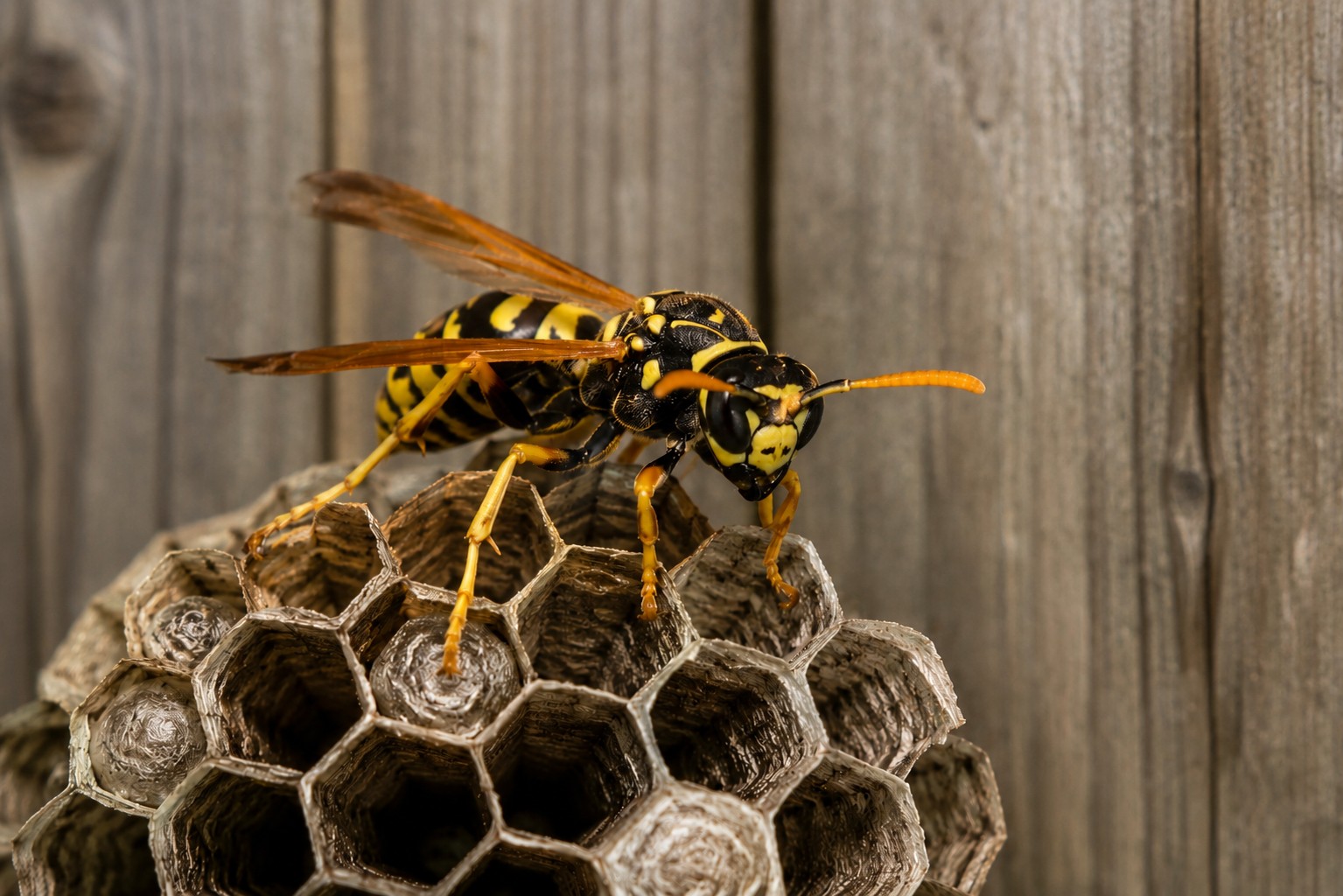
One of the biggest reasons for increased wasp activity is simply the size of the colony. Most annual wasp colonies begin with a single queen in the spring. After surviving the winter, the queen emerges and searches for a protected location where she can establish a new nest. She builds the first cells, lays eggs, and raises the first generation of workers.
Once those workers mature, they take over many of the responsibilities around the nest. They gather food, expand the nest, care for developing larvae, and defend the colony while the queen concentrates on reproduction.
Throughout spring and summer, more workers continue to emerge. This means a nest that contained only a handful of wasps early in the season can become a large and active colony by August. With more workers leaving the nest every day, homeowners naturally encounter more wasps around their properties. A nest that went unnoticed in June may become extremely obvious by late summer.
Wasps Become More Defensive Around Mature Nests
A mature colony has much more to protect than a small nest established earlier in the year. Worker wasps are responsible for defending the queen, larvae, pupae, and other members of the colony. When people or animals approach the nest, workers may interpret movement or vibration as a threat.
Activities that normally seem harmless can accidentally disturb a hidden nest. Mowing the lawn, trimming shrubs, moving patio furniture, opening a shed, using a deck, or walking through a doorway can put someone unexpectedly close to a colony.
Once the nest is disturbed, multiple wasps may emerge to defend it. This is one reason homeowners should avoid trying to knock down, spray, poke, or otherwise disturb an active nest. The closer you get to a mature colony, the greater the chance that defensive workers will respond.
Food Sources Change Toward the End of Summer
The wasp diet changes as the colony develops. Earlier in the season, worker wasps spend considerable time hunting other insects and collecting protein to feed developing larvae. In return, larvae produce nutrient-rich secretions that adult workers consume.
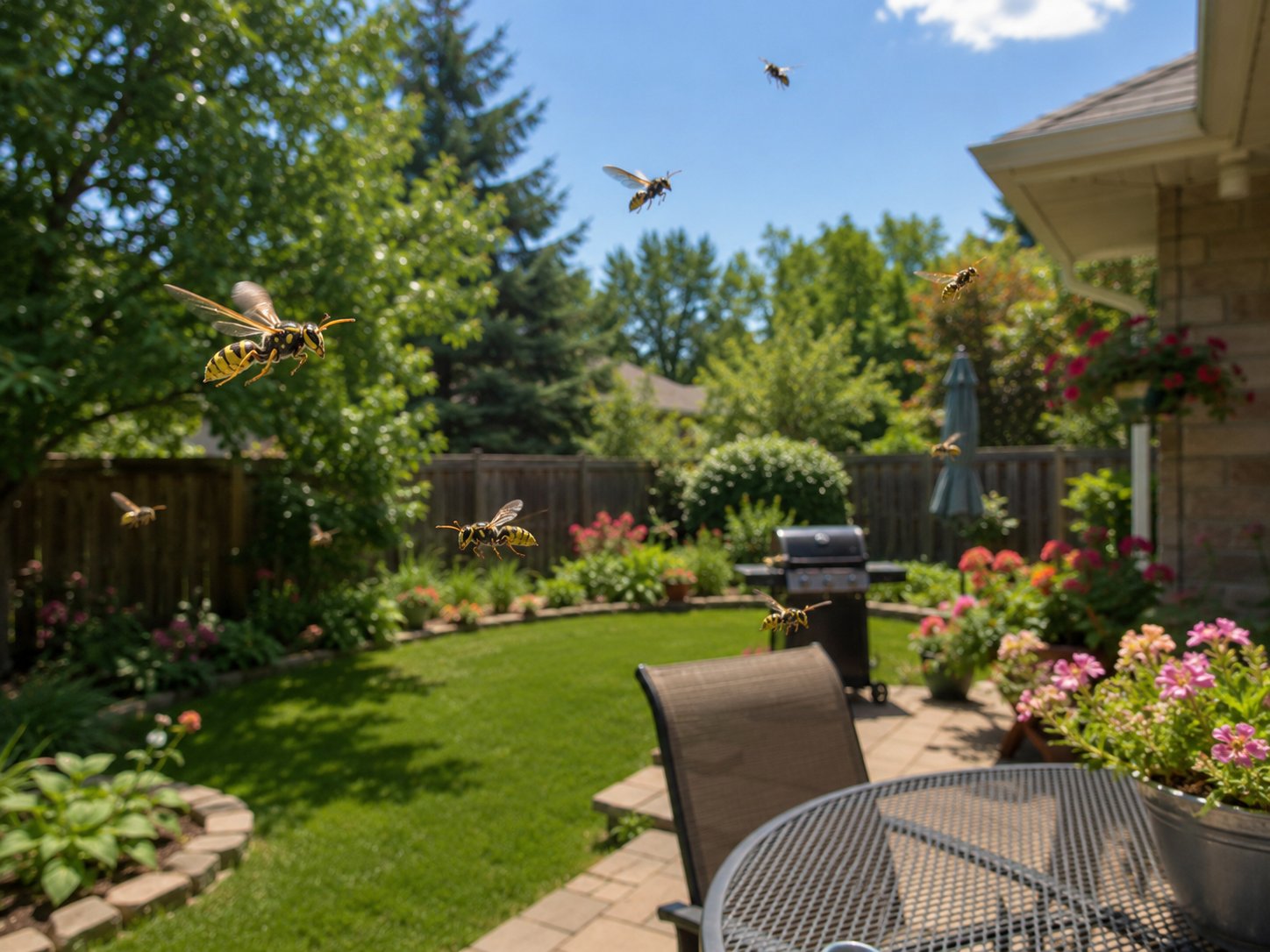
As summer progresses and the colony’s reproductive cycle changes, fewer larvae may be available to provide this food source. Adult wasps begin searching more aggressively for other sources of carbohydrates and sugar. This helps explain why wasps suddenly seem obsessed with human food during late summer.
Soft drinks, juice, fruit, ice cream, barbecue sauces, desserts, garbage, recycling containers, and other sweet foods can attract foraging wasps. Even an open beverage can quickly draw their attention. During a backyard barbecue, a wasp may repeatedly return to a table after discovering a reliable food source. Swatting at it can increase the risk of a sting.

Garbage and Recycling Can Attract Wasps
Outdoor garbage and recycling containers can become major wasp attractants during late summer. Pop cans, juice containers, food packaging, fruit scraps, and other residues provide the sugars wasps are actively searching for. A recycling bin containing several unrinsed drink containers can attract repeated activity throughout the day. Keeping lids closed and rinsing containers before placing them outside can help reduce this attraction.
It’s also a good idea to clean spills around outdoor garbage bins and avoid leaving food waste exposed. These steps won’t eliminate a nearby colony, but they can make your property less attractive to foraging workers.
Hidden Wasp Nests Can Become More Noticeable
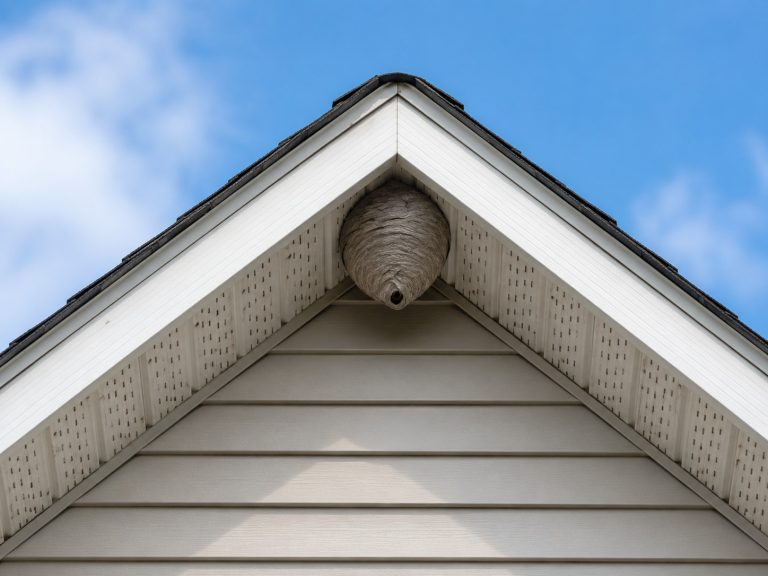
Not every wasp nest hangs visibly from a tree or roof overhang. Wasps frequently establish colonies inside structural spaces around homes. They may enter through small openings around soffits, siding, vents, window frames, fascia boards, rooflines, and other exterior gaps. The nest itself can remain completely hidden.
As the colony becomes larger, the amount of traffic entering and leaving the opening increases. A homeowner may suddenly notice a steady stream of wasps disappearing through the same small hole. This can make it appear as though the infestation developed overnight when the colony may actually have been growing for months. If you notice wasps repeatedly entering and exiting one specific point on your home, there may be an established nest inside the structure.
Late Summer Is When Large Nests Are Often Discovered
Many wasp nests are small enough to remain unnoticed earlier in the season. By August, an exposed nest may have grown considerably. A nest under a deck, inside a shed, beneath an overhang, or near a doorway can suddenly become much easier to see.
At the same time, increased worker activity makes the colony harder to ignore. This combination explains why wasp removal calls often increase during late summer. Homeowners aren’t necessarily dealing with a brand-new nest. In many cases, they’re finally discovering a colony that has been developing throughout the warmer months.
Why Swatting at Wasps Can Make the Situation Worse
When a wasp repeatedly circles your food or drink, swatting at it can be tempting. However, sudden movements can increase the chance that the insect perceives you as a threat. The risk becomes greater when you’re close to the nest.
Wasps use chemical signals to communicate danger to other colony members. A defensive response can quickly involve additional workers, particularly when the colony itself is being disturbed. If a wasp is flying around you away from the nest, remain calm and move away from the area when possible. If you notice several wasps behaving defensively in the same location, there may be a nest nearby.
Common Late-Summer Wasp Nest Locations Around Homes
Wasps look for protected spaces where their colonies can remain relatively sheltered from rain, wind, and other environmental conditions. Homes provide plenty of these locations. Around Kitchener and Waterloo properties, nests may be found beneath soffits, under deck railings, inside sheds, around rooflines, behind siding, inside wall cavities, beneath outdoor stairs, around window frames, and in protected corners around doorways.
Ground-nesting species may also establish colonies in abandoned burrows or other underground cavities. These nests can be particularly easy to disturb while mowing grass or performing yard work because the entrance may be difficult to see. Pay attention to repeated wasp traffic. If numerous insects are travelling to and from the same location, avoid the area and have it assessed.
Should You Remove a Wasp Nest Yourself?
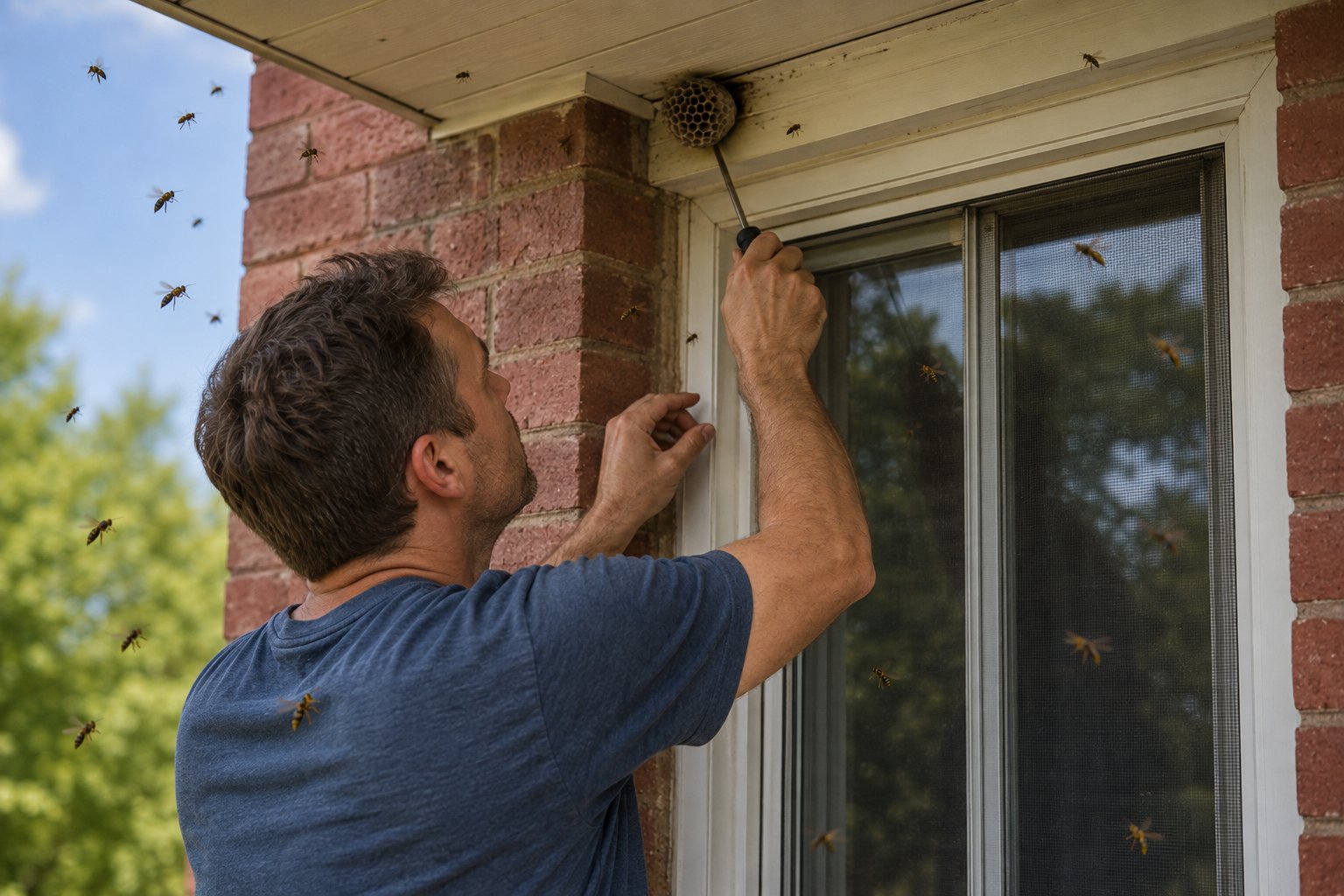
DIY wasp nest removal can expose you to a large number of defensive workers, especially during late summer when colonies are mature. Simply knocking down an exposed nest does not guarantee the insects will be eliminated. Spraying the visible entrance of a structural nest may also fail to reach the colony hidden farther inside the building.
Trying to access nests from a ladder introduces another concern. A person who is suddenly surrounded by defensive wasps can easily lose their balance while attempting to climb down. Professional pest control technicians have protective equipment, appropriate treatment products, and experience identifying where colonies are located. This is particularly important when dealing with nests inside soffits, siding, walls, or other difficult-to-access areas.
What to Do If You Find a Wasp Nest
Once you’ve identified an active nest, avoid disturbing it. Keep children and pets away from the immediate area and temporarily avoid nearby entrances or outdoor spaces when practical. Don’t block an active entrance into a structural nest without first dealing with the colony. Wasps trapped inside a wall or soffit may search for another exit.
You should also avoid experimenting with fire, gasoline, boiling water, pressure washers, or other improvised removal methods. These approaches can create additional hazards without reliably eliminating the colony. Professional treatment is a much safer option for established nests.
How to Reduce Wasp Activity Around Your Property
While you can’t prevent every wasp from entering your yard, reducing accessible food sources can make outdoor spaces less attractive. Keep garbage and recycling containers closed, rinse sugary drink containers, clean outdoor eating areas after meals, and pick up fallen fruit from fruit trees. Drinks should also be covered when you’re outside, particularly cans and bottles where a wasp could enter unnoticed.
Inspecting the exterior of your home during spring and early summer can also help. Small developing nests are much easier to identify before colonies reach their late-summer peak. Potential structural openings around soffits, siding, vents, and trim can be repaired when there is no active nest occupying the space.
Do Wasps Die When the Weather Gets Cold?
For many social wasp species found in Ontario, the established colony does not survive through winter. As temperatures fall, workers and the old queen eventually die. Newly produced reproductive queens leave the colony and seek protected places where they can overwinter. The following spring, surviving queens emerge and establish new colonies.
This doesn’t necessarily mean homeowners should ignore an active nest in August or September. Warm weather can continue for weeks, and a mature colony may remain highly active during that period. A nest near a doorway, patio, children’s play area, deck, or another frequently used space can continue creating a sting risk until activity naturally ends or the colony is professionally treated.
Professional Wasp Nest Removal in Kitchener and Waterloo
Late summer is one of the busiest times of year for wasp activity. Colonies have had months to grow, more workers are searching for food, and mature nests can become highly defensive when disturbed.
If you’re seeing an occasional wasp around flowers or your garden, that doesn’t necessarily mean you have a nest on your property. However, repeated traffic around one particular area of your home is worth investigating. Wasps continuously entering a soffit, siding gap, doorway, deck, or wall opening can indicate an established colony. Trying to handle a mature nest yourself can result in multiple stings and may not eliminate the entire infestation.
Book Wasp Control With KW Pest Control
If wasps have taken over part of your property, KW Pest Control can help. We provide professional wasp control in Kitchener, Waterloo, and surrounding communities, including treatment for exposed nests and colonies located within structural areas of the home. Our technicians can safely address active nests without putting you at unnecessary risk.
Don’t spend the rest of the summer avoiding your deck, doorway, patio, or backyard because of an active wasp nest. Contact KW Pest Control today to book your wasp nest treatment and get your outdoor space back.