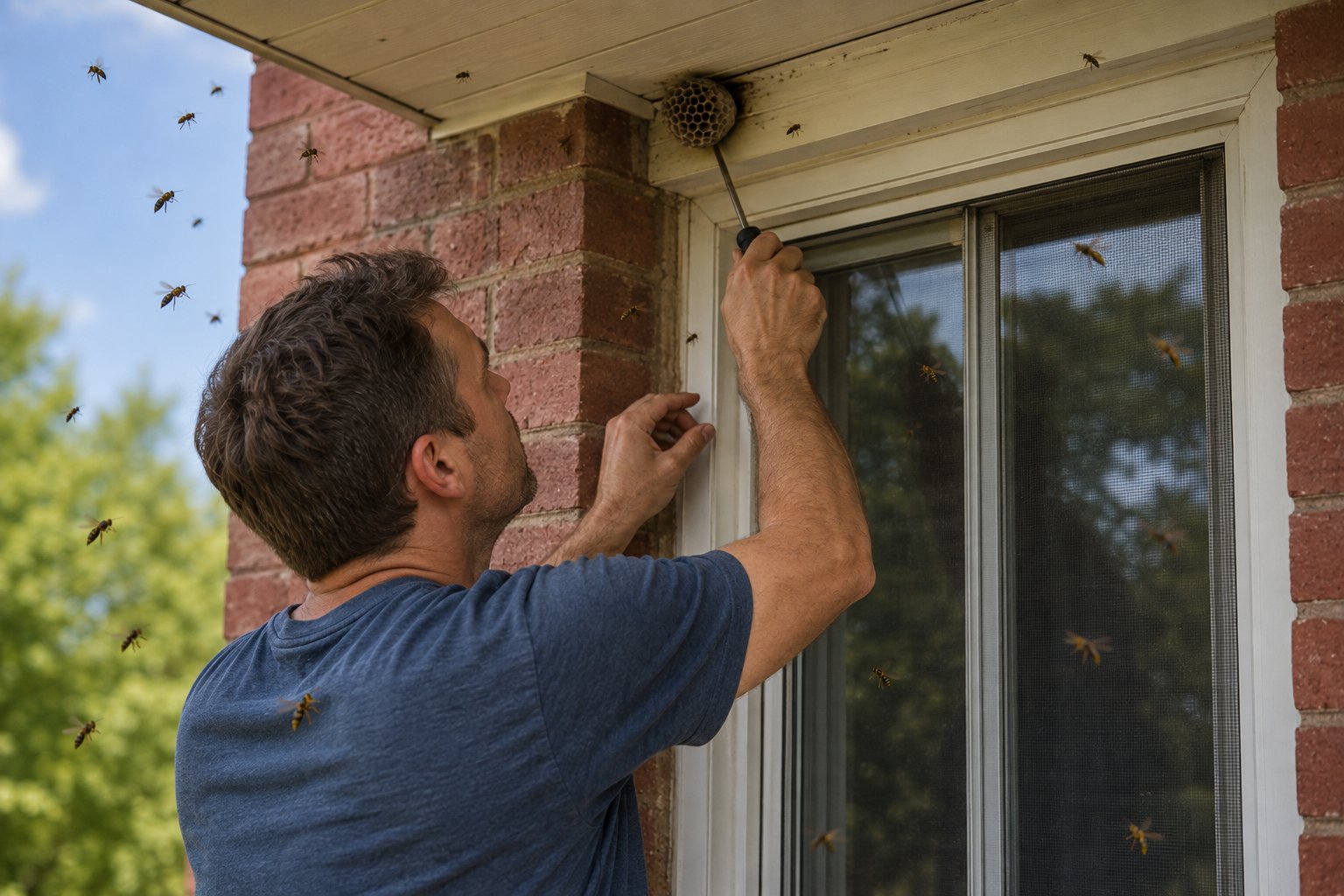
Finding a wasp nest attached to your home is enough to make most homeowners nervous. Whether it’s hanging under a deck, tucked into the corner of a doorway, or hidden beneath the soffit, your first instinct might be to remove it immediately. With countless DIY videos and homemade remedies circulating online, many people assume wasp nest removal is a quick and inexpensive weekend project.
The reality is very different. While it may seem simple to spray or knock down a nest, removing a wasp colony yourself carries significant risks. Wasps are highly defensive insects, and disturbing their nest can result in multiple painful stings within seconds. In many cases, DIY attempts fail to eliminate the colony entirely, leaving homeowners with an even bigger problem.
If you’ve discovered a wasp nest on your property, here’s what you need to know before deciding whether to tackle it yourself.
Why Wasps Become Aggressive
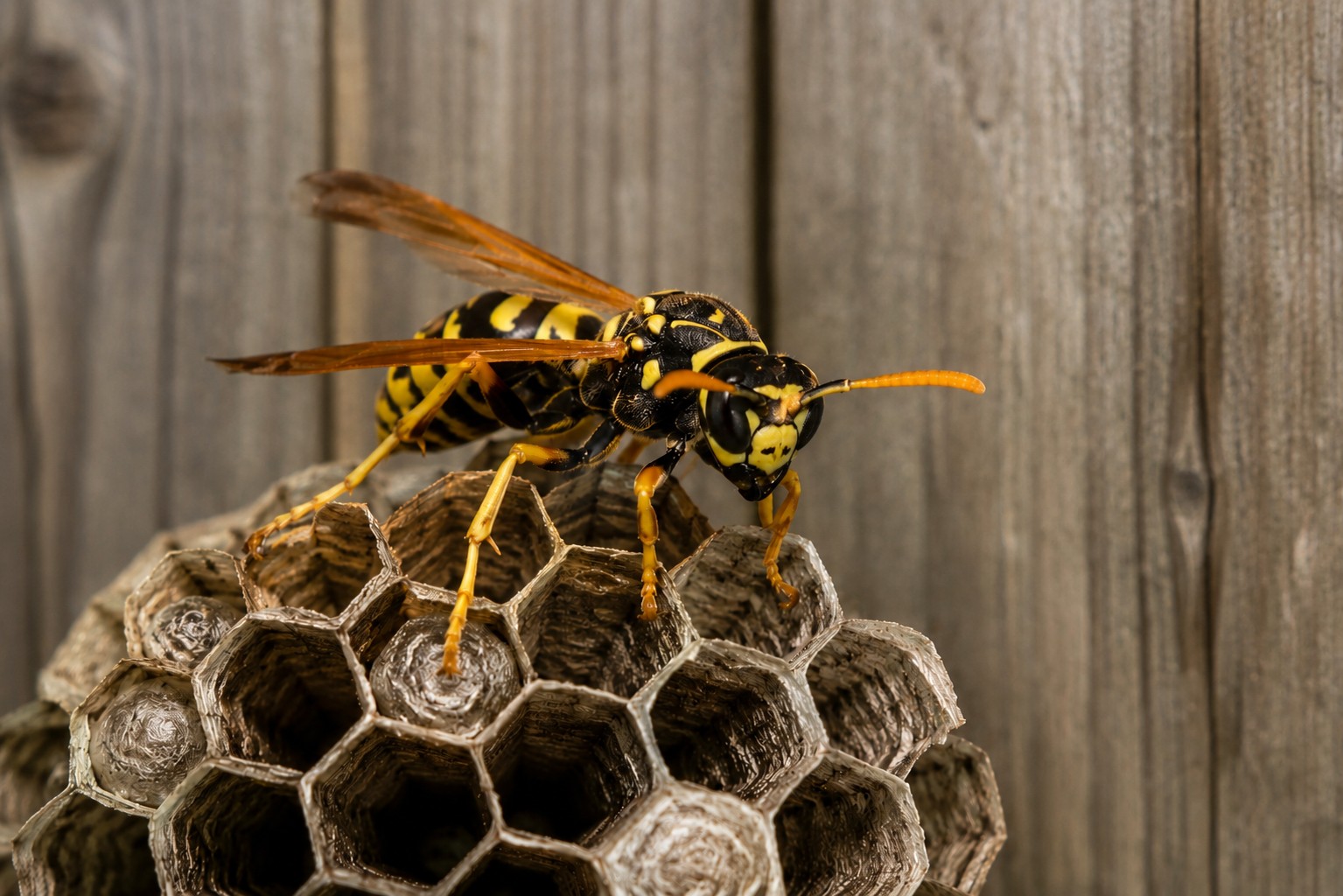
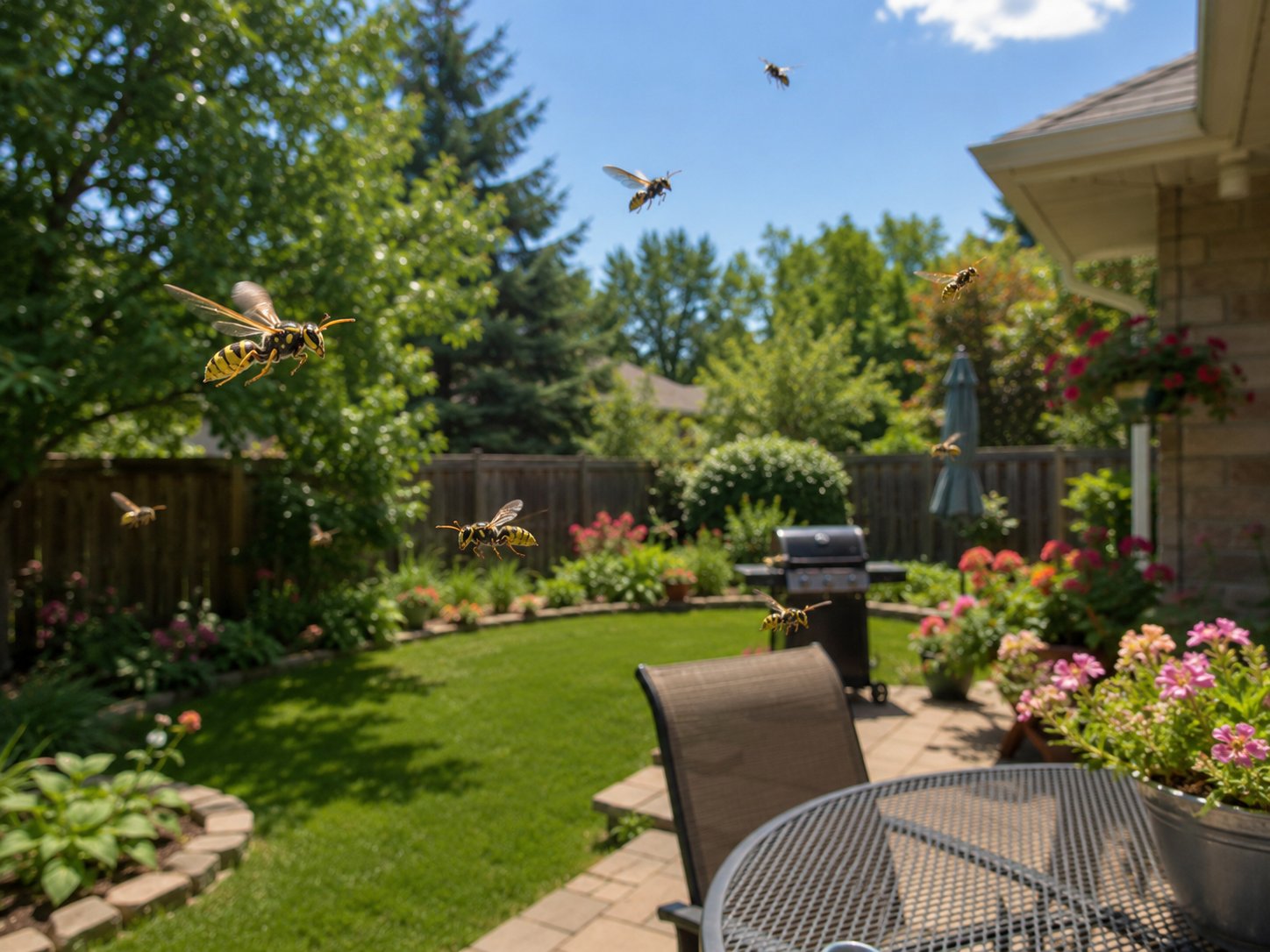
Unlike bees, which usually sting only when directly threatened, wasps aggressively defend their nests. Worker wasps spend their entire lives protecting the queen and developing larvae. When they detect danger, they release alarm pheromones that alert the rest of the colony. Within moments, dozens of wasps can emerge to defend the nest.
Even vibrations from a ladder, lawn mower, pressure washer, or broom can trigger an attack. This defensive behaviour becomes even more pronounced during mid and late summer when colonies reach their maximum size.
Common Places Wasps Build Nests
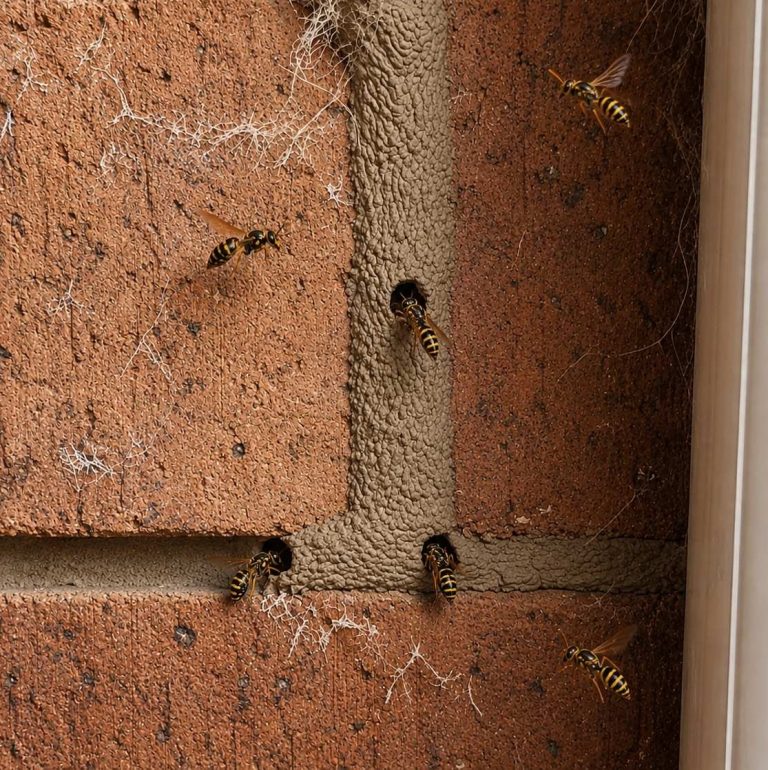
One reason homeowners accidentally disturb wasp nests is that many colonies are hidden in places people use every day. Common nesting locations include under deck railings, inside soffits, beneath roof overhangs, behind shutters, inside sheds, under outdoor furniture, around playsets, inside wall cavities, and in the corners of doorways or window frames. Structural nests are especially dangerous because homeowners often don’t realize the colony exists until they notice wasps flying in and out of a small opening.
Is It Ever Safe to Remove a Wasp Nest Yourself?
Some very small starter nests discovered early in spring may appear manageable. However, identifying whether a nest is truly abandoned or contains an active queen isn’t always straightforward. Once worker wasps are present, even a relatively small nest can become dangerous to approach.
Most homeowners also underestimate how quickly wasps respond once they sense a threat. Standing only a few feet away while spraying a nest may be enough to provoke dozens of defensive insects. Because of these risks, professional removal is generally the safest option whenever a nest is actively occupied.
Why DIY Wasp Removal Often Goes Wrong
Many internet articles recommend homemade removal methods that are ineffective or dangerous. Spraying water, using gasoline, burning the nest, striking it with a stick, or attempting to vacuum wasps can all increase the risk of being stung. Store-bought aerosol sprays may kill some visible wasps but often fail to reach the queen or workers deep inside the nest.
If the nest is hidden inside a wall, spraying the entrance alone rarely eliminates the colony. Instead, surviving wasps may simply find another way out, sometimes entering the living space through interior wall voids. An incomplete treatment can actually make the problem worse.
The Risks of Multiple Wasp Stings
Most people experience immediate pain, redness, and swelling after a wasp sting. However, receiving numerous stings at once can become a medical emergency, even for individuals who aren’t allergic. Large numbers of stings increase the amount of venom entering the body and can cause severe swelling, nausea, dizziness, headaches, or more serious complications.
For individuals with allergies, a single sting may trigger anaphylaxis, a life-threatening reaction that requires immediate emergency medical care. Because it’s impossible to predict how a colony will respond when disturbed, unnecessary exposure should always be avoided.
Hidden Nests Present Additional Challenges
Exposed paper nests are relatively easy to spot. Hidden nests are another matter entirely. Many wasp species build colonies inside wall cavities, rooflines, soffits, and beneath siding where the nest remains completely concealed. Homeowners may only notice a steady stream of wasps entering and leaving a tiny crack around the home.
Attempting DIY treatment without knowing the full size or location of the colony often fails because much of the nest remains inaccessible. Professional technicians use specialized equipment designed to reach concealed nesting areas safely and effectively.
What Professional Wasp Removal Involves
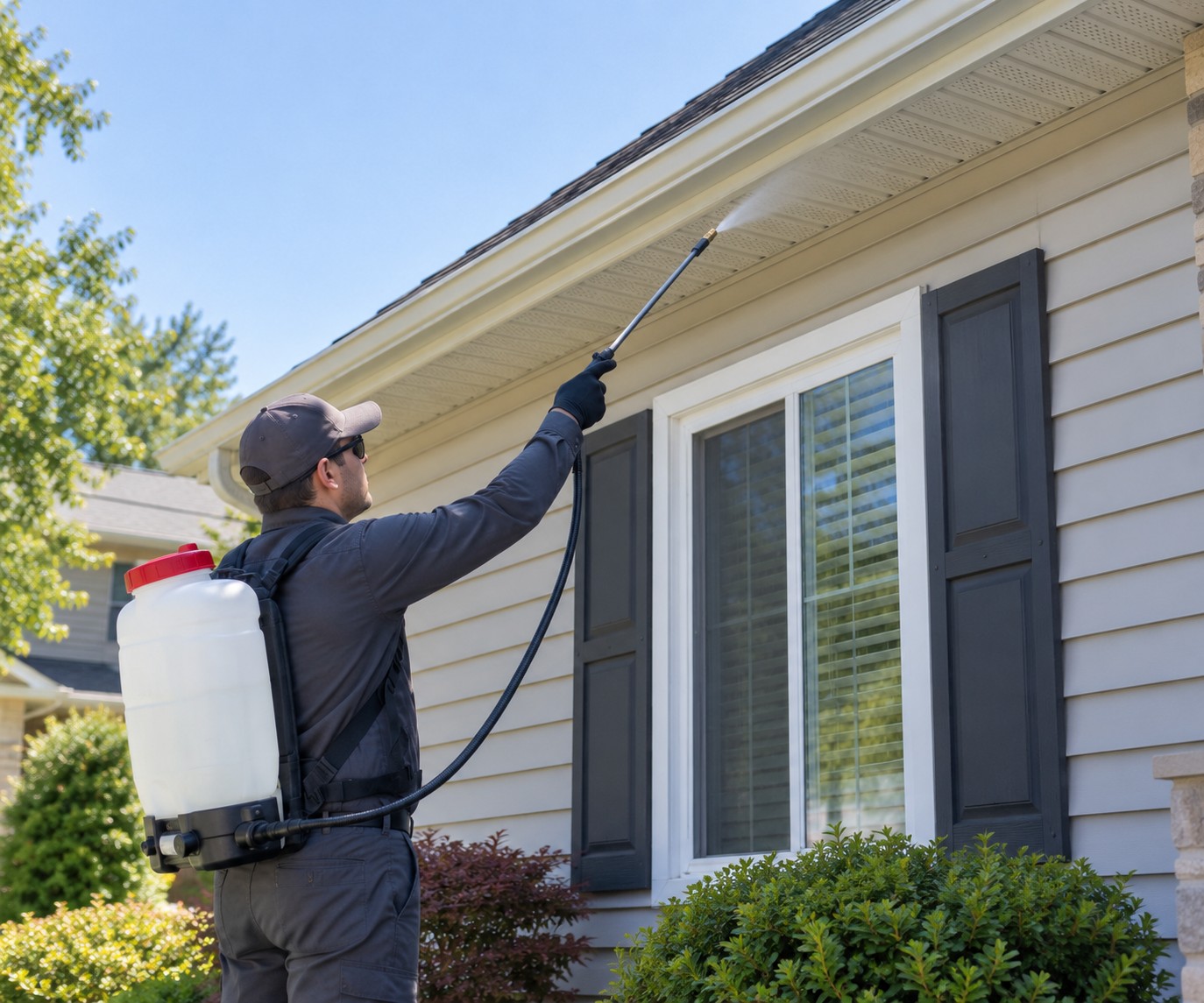
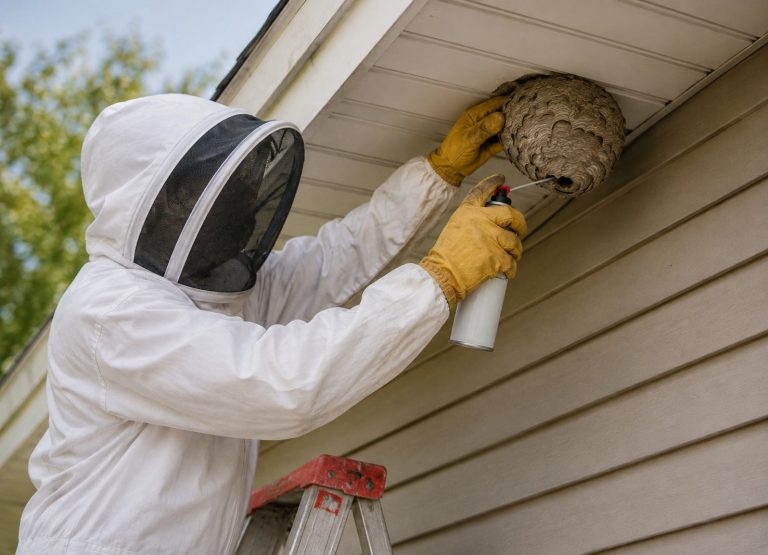
Professional wasp removal begins with identifying the species and locating the entire colony. This allows technicians to determine the safest and most effective treatment method. For exposed nests, products are applied directly to eliminate the colony quickly while minimizing disturbance. For structural infestations, specialized insecticides and application equipment allow technicians to treat nests hidden inside walls, soffits, or roof spaces without causing wasps to spread throughout the home. Once activity has stopped, accessible nests may be removed, and homeowners can receive recommendations for preventing future infestations.
Can Wasps Return After Removal?
The paper nest itself is usually not reused the following season. However, newly mated queens often search for similar protected locations the following spring. If your home provided an ideal nesting site once, there’s a good chance another queen will investigate the same area again.
Regular inspections around the home’s exterior each spring can help catch small starter nests before they grow. Sealing gaps, repairing damaged soffits, and reducing sheltered spaces also make future nesting less attractive.
How to Stay Safe Until the Nest Is Removed
If you’ve located a wasp nest, the safest approach is simply to avoid disturbing it. Keep children and pets away from the area and avoid using nearby doors, decks, or walkways whenever possible. Delay activities such as pressure washing, trimming shrubs, or mowing directly beside the nest until treatment has been completed. If the colony is near a frequently used entrance, choose another route until the wasps have been safely removed. These simple precautions can significantly reduce the risk of accidental stings while waiting for professional service.
Why Quick Action Matters
Many homeowners assume they’ll deal with the nest later. Unfortunately, wasp colonies continue growing throughout the summer. A nest that contains only a few dozen workers in June may hold several hundred by August. As the colony grows, both the number of wasps and their defensive behaviour increase. Treating the problem early usually makes removal simpler, safer, and less disruptive. Waiting often allows the infestation to become larger and more difficult to manage.
When You Should Call a Professional Immediately
Certain situations should always be handled by a licensed pest control professional. If the nest is located inside a wall, roof, soffit, attic, or another structural space, professional treatment is the safest choice. The same applies if the nest is high off the ground, located near electrical equipment, positioned above a doorway or frequently used area, or if anyone in the household has a known allergy to wasp stings. Attempting removal under these circumstances places both the homeowner and others nearby at unnecessary risk.
Trust KW Pest Control for Safe Wasp Nest Removal
Removing a wasp nest yourself may seem like a way to save time or money, but the risks often outweigh the benefits. Professional treatment provides a safer, more effective solution that eliminates the colony while reducing the chance of painful stings or incomplete removal.
At KW Pest Control, we provide fast, professional wasp nest removal services throughout Kitchener and the surrounding communities. Whether the nest is attached to your deck, hanging from your soffit, or hidden inside your home’s structure, our experienced technicians have the equipment and expertise to remove it safely.
Reach out to our team at KW Pest Control to schedule your wasp nest removal service and enjoy the rest of the summer without worrying about aggressive wasps around your home.