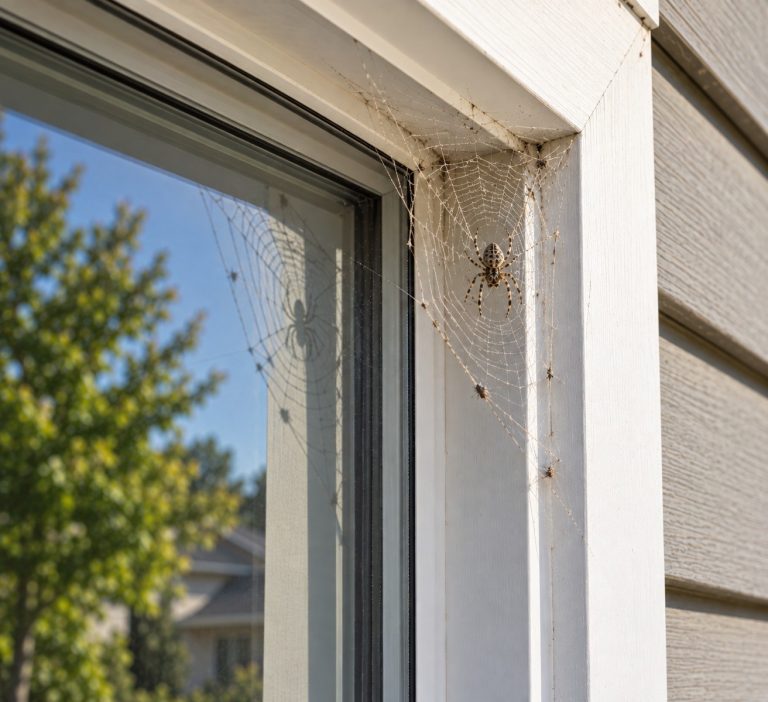
Spiders are a common sight around homes throughout Kitchener, Waterloo, and the surrounding region. While seeing an occasional spider outdoors is normal, the problem can become frustrating when webs begin covering windows, soffits, porch railings, light fixtures, decks, and entryways. Some homeowners also notice spiders making their way indoors, particularly as temperatures begin to change later in the season.
One of the most common questions homeowners ask is whether seasonal spider sprays actually work. Professional spider treatments can significantly reduce spider activity around a property, but understanding how these treatments work is important. Spider control is not simply about spraying a spider whenever one appears. A successful seasonal treatment focuses on the areas where spiders travel, hide, build webs, and hunt for other insects.
For homeowners dealing with recurring spider problems, professional seasonal spider control can make the exterior of a home much easier to maintain.
Why Are There So Many Spiders Around Ontario Homes?
Ontario provides spiders with favourable conditions throughout much of spring, summer, and early fall. As temperatures rise, insect populations increase. Flies, mosquitoes, moths, midges, ants, and other small insects become active around homes, providing spiders with a steady food supply.
Homes near ponds, creeks, wooded areas, parks, and other sources of vegetation may experience particularly heavy spider activity because these environments support various insect populations. This is why properties with a large number of flying insects often develop noticeable spider populations as well.
Exterior lighting can make the problem worse. Porch lights, garage lights, landscape lighting, and illuminated windows attract insects after dark. Spiders quickly take advantage of these feeding opportunities and commonly build webs near lights, windows, doors, and other areas where insects gather.
The structure of the home also matters. Soffits, siding edges, window frames, brick ledges, decks, railings, rooflines, and covered porches all provide protected locations where spiders can establish webs.
What Is a Seasonal Spider Spray?
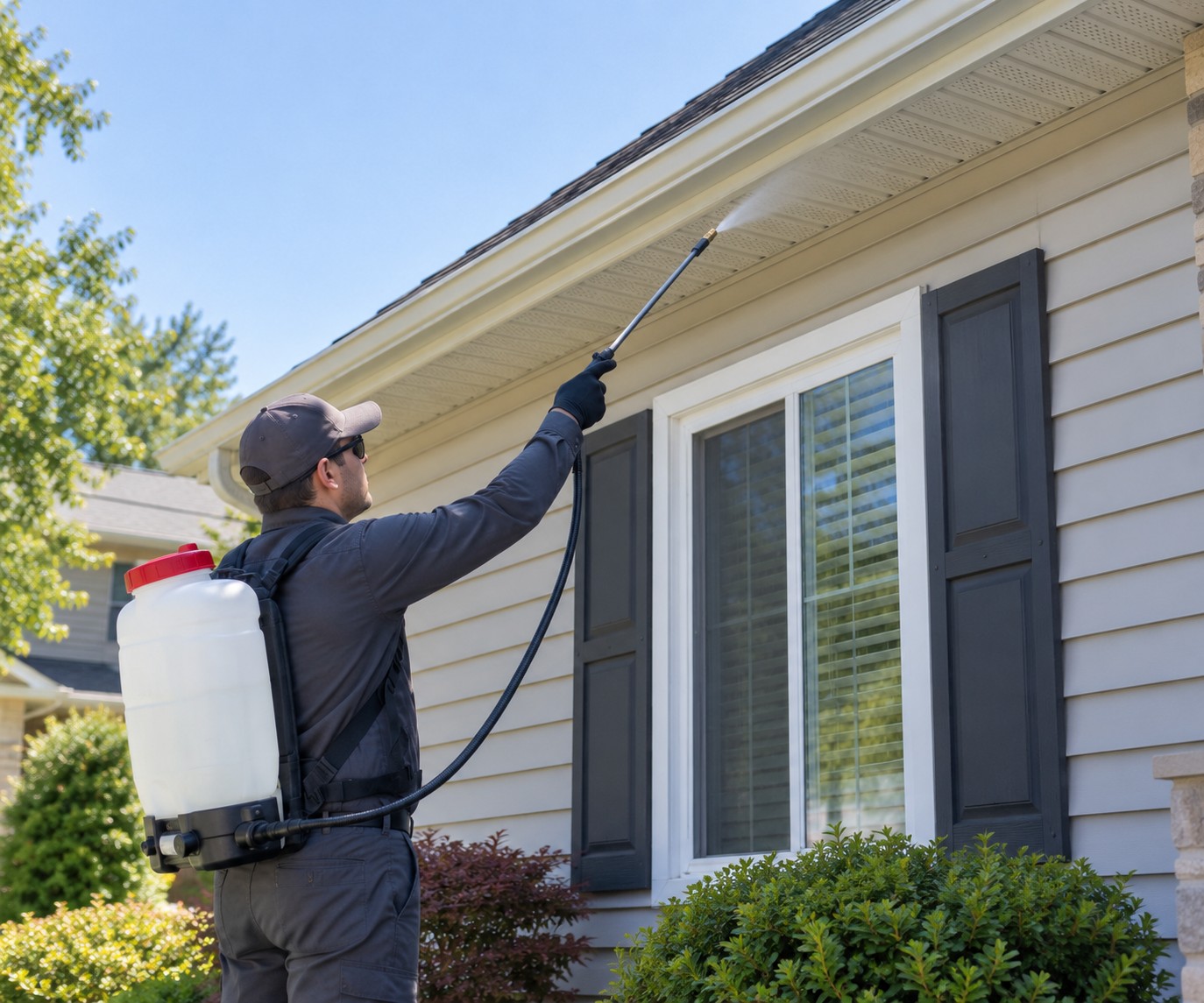
A professional seasonal spider spray typically involves applying a residual pest-control product to strategic areas around the exterior of a home. Rather than treating one visible spider at a time, the goal is to establish coverage around the places where spiders are most likely to crawl, hide, or build webs. Depending on the property, treatment may include areas around the foundation, exterior windows and doors, siding edges, accessible soffits, porch areas, deck structures, and other common spider locations.
Residual products are designed to remain effective on treated surfaces for a period after application. When spiders travel across those areas and come into contact with the treatment, they may be affected by the residual insecticide. This provides longer-lasting control than simply knocking down visible spiders with a household aerosol.
Do Spider Sprays Actually Work?
Yes, professional spider sprays can be effective at reducing spider populations around a home. However, homeowners should have realistic expectations about what a spider treatment can accomplish.
Spider sprays are intended to control and reduce spider activity, not create an invisible barrier that guarantees another spider will never enter the property. Homes are part of an outdoor ecosystem, and new spiders can continually migrate onto a property from surrounding vegetation, neighbouring properties, fences, sheds, trees, and landscaping.
A properly applied treatment reduces the number of spiders successfully establishing themselves on treated areas of the home. The improvement can be particularly noticeable on properties that previously experienced heavy webbing around windows, porch ceilings, soffits, and exterior lights.
Why Spider Control Can Be More Difficult Than Other Insect Treatments
Spiders are different from many common household pests. Ants, cockroaches, and several other insects frequently travel along predictable surfaces where residual treatments can be highly effective. Spiders may spend considerable time suspended in webs without making frequent contact with treated surfaces.
Their body structure also plays a role. Because spiders walk on long legs, their bodies may have less direct contact with treated surfaces than crawling insects. This is one reason professional spider treatments focus heavily on locations where spiders are likely to travel when entering or leaving hiding areas. Treatment coverage matters. Spraying random areas of a property is much less useful than targeting spider harbourage and travel zones.
Why Spider Problems Often Return
A spider treatment can work well and homeowners may still notice new spiders later in the season. This does not necessarily mean the treatment failed. Spiders continually move through the environment. If a home has abundant insect activity, new spiders have a strong reason to approach the structure. A property surrounded by vegetation may also experience continuous pressure from nearby spider populations.
Weather can affect exterior treatments as well. Heavy rainfall, intense sunlight, temperature fluctuations, and normal environmental exposure gradually reduce residual effectiveness. This is why spider control is often treated as a seasonal management program rather than a permanent one-time solution.
When Is the Best Time for Spider Spraying in Ontario?
Spider activity typically increases as Ontario moves through spring and summer. By late summer and early fall, webs can become especially noticeable around homes. Starting treatment earlier in the active season can help reduce the number of spiders that become established around the property. Treatment later in summer can also be beneficial when spider activity has already become noticeable.
September can be a particularly frustrating period for homeowners. Mature spiders are often more visible, webs may appear larger, and homeowners tend to notice increased activity around decks, windows, doors, and exterior lighting.
As temperatures eventually fall, some spiders also begin seeking more protected environments. Seasonal timing therefore plays an important role in controlling the population before activity becomes excessive.
Why Web Removal Is Important
Removing existing spider webs can complement a professional treatment. Old webs can make a home appear to have significantly more current spider activity than it actually does. Web removal also makes it easier to identify where fresh webs are appearing after treatment.
Homeowners can periodically remove accessible webs from porch ceilings, railings, windows, doors, and other reachable areas using a broom or web-removal tool. If a fresh web repeatedly appears in the same location, there may be a particularly favourable hiding or feeding area nearby. However, homeowners should avoid unsafe attempts to remove webs from high rooflines or areas requiring unstable ladders.
Controlling the Insects That Attract Spiders
One of the most overlooked parts of spider management is reducing their food supply. Spiders are predators. If insects regularly gather around your home, spiders have a reason to stay. Exterior lights are a common example. Bright lights near doors and windows can attract moths, flies, mosquitoes, and other insects throughout the night. Spiders often build webs directly beside these lights because prey arrives automatically.
Reducing unnecessary nighttime lighting can sometimes help. Changing where lights are positioned or keeping unnecessary exterior lights off may also reduce insect activity near frequently used entrances. Standing water, overflowing gutters, dense vegetation, and excessive moisture can contribute to insect populations as well. A home with fewer insects is generally less attractive to spiders.
Landscaping Can Influence Spider Activity
Landscaping is another important factor. Shrubs growing directly against siding create sheltered environments where insects and spiders can thrive. Tree branches touching the roof or siding can also provide pathways onto the structure. Keeping shrubs and vegetation reasonably trimmed away from the house improves airflow and reduces protected harbourage around the foundation.
Firewood, construction materials, patio items, and other objects stored against the exterior can also provide hiding locations. You do not need to eliminate landscaping around your home. The goal is simply to avoid creating dense, undisturbed areas immediately against the structure.
Can Spider Sprays Keep Spiders Out of the House?
Exterior spider control can help reduce the number of spiders living around the structure, which may also reduce indoor sightings. However, treatment works best when combined with basic exclusion.
Spiders can enter through gaps around doors, windows, utility penetrations, siding, vents, and other openings. Damaged weather stripping or poorly sealed screens can provide easy access. Sealing obvious openings helps make the home less accessible to both spiders and the insects they hunt.
If spiders are frequently appearing indoors, the problem may not be limited to the exterior. Basements, garages, crawlspaces, storage rooms, and other quiet areas can provide suitable harbourage. Professional pest control can help determine whether exterior treatment alone is appropriate or whether interior treatment should also be considered.
Are DIY Spider Sprays Effective?
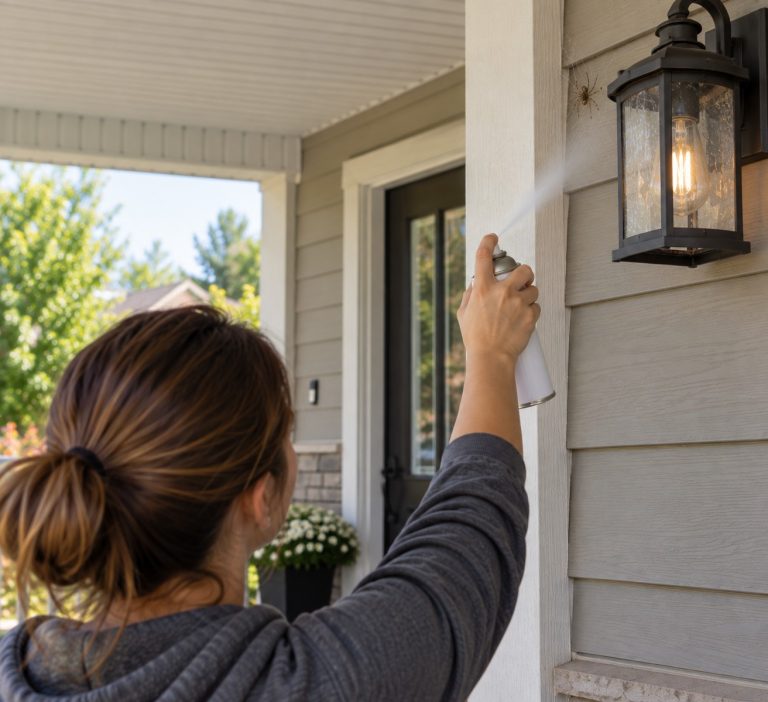
Store-bought spider sprays may kill spiders when sprayed directly, but homeowners often struggle to achieve the same level of coverage provided by professional equipment and treatment methods. Treating one spider does little to address the others hiding elsewhere around the structure.
Another common mistake is applying excessive amounts of pesticide. Using more product does not automatically produce better results. Pest-control products should always be applied according to their label instructions.
Professional technicians can identify the areas where spiders are most likely to establish themselves and apply treatment strategically rather than simply spraying every visible surface. This targeted approach can improve control while avoiding unnecessary application.
How Long Does a Spider Spray Last?
There is no universal answer because exterior residual performance depends on the product, surface, weather, exposure to sunlight, rainfall, and environmental conditions.
A protected porch ceiling may retain treatment differently from a fully exposed deck railing. Likewise, shaded siding may experience different environmental exposure than a south-facing wall receiving intense sunlight. This is another reason spider treatments are often planned around the active season.
Homeowners should also understand that residual treatment does not necessarily kill a spider immediately after it appears. A spider must generally contact a treated area before the product can affect it. Seeing an occasional spider after treatment therefore does not automatically mean the application is no longer working.
What Results Should You Expect?
A successful spider-control treatment should result in reduced spider activity and less recurring webbing around treated areas. Results are usually most noticeable when professional treatment is combined with sensible property maintenance. Removing old webs, reducing insect-attracting conditions, trimming vegetation away from the structure, and sealing obvious entry points can all improve long-term control.
Properties with significant spider pressure may require seasonal maintenance because new spiders can continually migrate onto the property. The goal is not to eliminate every spider from the surrounding environment. Instead, treatment focuses on preventing the exterior of your home from becoming one of their preferred places to live and build webs.
Seasonal Spider Control in Kitchener and Waterloo
Spider activity is a normal part of Ontario’s warmer months, but you do not have to accept heavy webs covering your windows, doors, soffits, deck, and porch every summer.
Professional seasonal spider spraying can reduce established spider populations and provide residual control around commonly affected areas. When combined with practical prevention measures, it can make a noticeable difference throughout the active spider season.
If spiders keep returning around your property, KW Pest Control can provide professional spider treatment for homes in Kitchener, Waterloo, and surrounding communities. Our technicians can target common spider harbourage and activity areas around your home to help reduce spiders and recurring web buildup.
Schedule your seasonal spider spray with KW Pest Control and keep spider activity around your home under control.