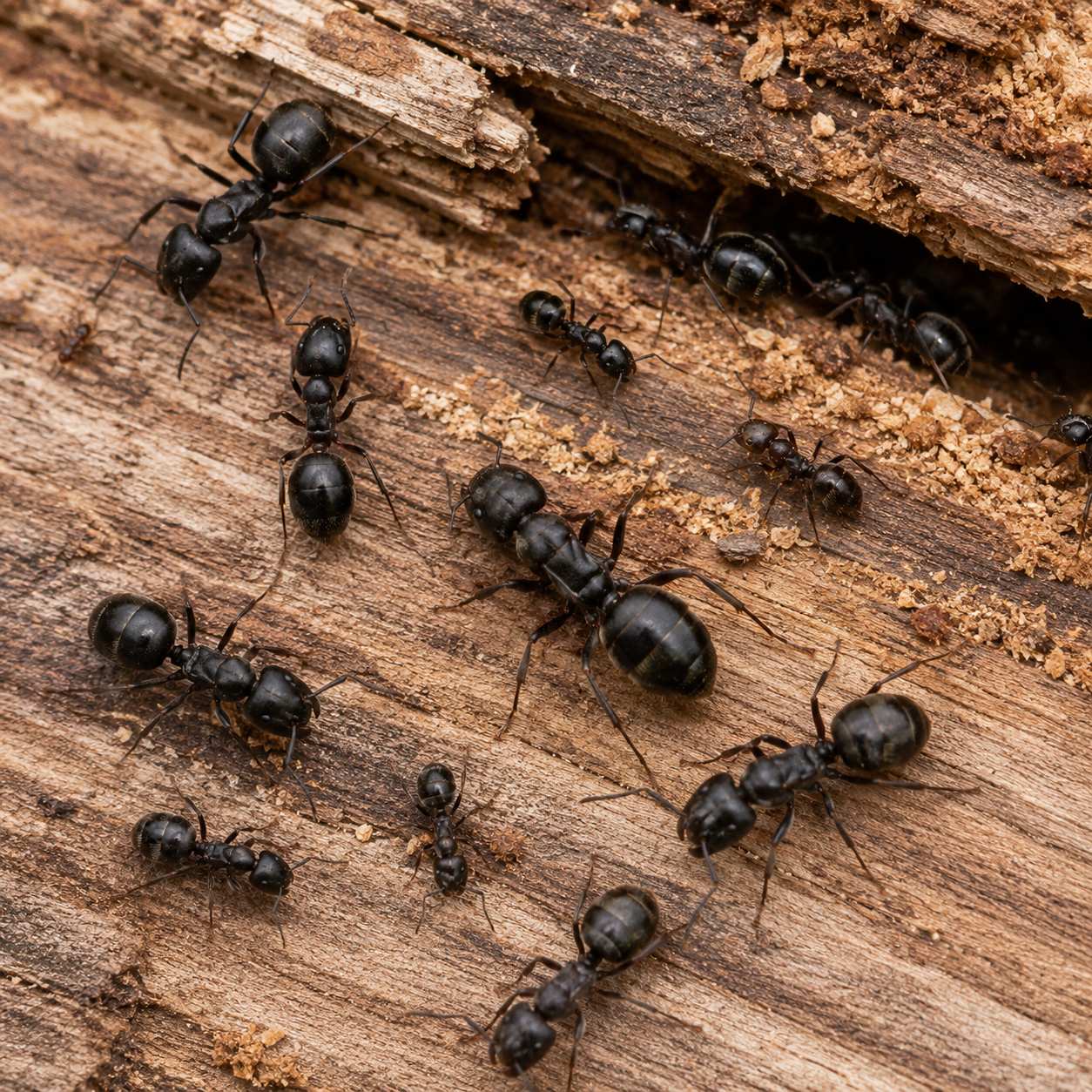
If you’ve started noticing large black ants crawling through your kitchen, around your windows, or along the outside of your home, you may be wondering whether they’re simply a nuisance or something more serious. Carpenter ants are one of the most destructive household pests in Ontario because they tunnel through wood to build their nests. While they don’t eat wood like termites, they can still cause significant structural damage if an infestation is left untreated.
For homeowners in Kitchener, carpenter ants are especially common during the spring and summer months when colonies become more active. Moisture, aging wood, and wooded neighbourhoods create ideal conditions for these insects to establish nests both inside and outside the home.
Understanding the warning signs of carpenter ants, the type of damage they cause, and the best methods for eliminating them can help protect your investment before repairs become costly.
Do Carpenter Ants Actually Damage Homes?
The short answer is yes.
Carpenter ants excavate galleries inside wood to create space for their colony. Unlike termites, they don’t consume the wood for food. Instead, they chew through it and remove the material, leaving behind smooth tunnels that weaken structural components over time.
A small colony may cause very little noticeable damage at first. However, mature colonies can contain thousands of worker ants. As they continue expanding their nest year after year, more wood is hollowed out, reducing the strength of framing, wall studs, window frames, decks, and other wooden structures.
When multiple satellite colonies develop throughout a home, the damage can become extensive.
Why Kitchener Homes Are Vulnerable
Carpenter ants thrive in Southern Ontario’s climate. Kitchener’s combination of humid summers, freezing winters, mature trees, and seasonal rainfall provides excellent nesting conditions.
Homes are especially attractive when they have:
- Moist or water-damaged wood
- Leaking roofs or windows
- Rotten deck boards
- Tree branches touching the roof
- Firewood stored against the house
- Mulch piled against the foundation
- Older wooden construction
Many infestations begin outdoors before eventually expanding into the home.
Where Carpenter Ants Build Their Nests
One misconception is that carpenter ants only infest old or damaged homes. In reality, even newer homes can develop carpenter ant problems if moisture or wood decay is present. Common nesting locations include:
Wall Voids
Hidden spaces inside walls provide darkness, warmth, and protection. Colonies often expand behind drywall without homeowners realizing it.
Attics
Roof leaks or condensation can create damp wood that carpenter ants find ideal for nesting.
Window and Door Frames
Small leaks around windows often soften surrounding wood, making it easier for ants to excavate.
Decks and Porches
Outdoor wooden structures frequently develop moisture damage from rain and snow, creating perfect nesting sites.
Crawl Spaces and Basements
High humidity levels and untreated lumber make these areas attractive to carpenter ants.
Trees and Stumps
Many colonies begin in decaying trees or stumps before workers forage into nearby homes.

Signs Carpenter Ants Are Damaging Your Home
One of the challenges with carpenter ants is that much of the damage happens out of sight. Fortunately, there are several warning signs homeowners should watch for.
Large Black Ants Indoors
Seeing large black ants inside your home regularly is one of the earliest indicators of an infestation.
Worker carpenter ants are much larger than common pavement ants and usually range from 6 to 13 millimetres long. If you continue seeing them over several weeks, especially indoors, it’s worth having your home inspected.
Frass Around Wooden Structures
As carpenter ants excavate wood, they push the debris outside the nest. This material, known as frass, resembles coarse sawdust mixed with insect body parts, insulation fragments, and tiny pieces of wood.
Unlike ordinary sawdust from construction projects, carpenter ant frass often appears in small piles beneath wall voids, windows, baseboards, decks, or wooden beams. Fresh frass usually indicates an active nest nearby.
Rustling or Faint Noises Inside Walls
Large carpenter ant colonies can sometimes be heard moving inside wall cavities. Homeowners occasionally describe hearing faint scratching, rustling, or clicking noises at night when the house is quiet.
Although these sounds are subtle, they can signal a significant colony hidden within structural wood.
Swarmers Inside the Home
During late spring and early summer, mature colonies produce winged reproductive ants. Finding winged carpenter ants indoors usually means a well-established colony is already living inside the structure. These flying ants are often mistaken for termites, but carpenter ants have bent antennae, narrow waists, and larger front wings.
Hollow or Weak Wood
As carpenter ants continue expanding their galleries, affected wood may begin feeling hollow or soft. Window frames, trim boards, porch posts, or deck railings may become weaker over time. In severe infestations, sections of wood can eventually crack or collapse.
How Fast Does Carpenter Ant Damage Occur?
Carpenter ants typically work much slower than termites. A brand-new colony rarely causes major structural damage during its first year. However, colonies continue growing, and mature nests can remain active for many years if left untreated.
Because carpenter ants often establish satellite colonies throughout a structure, the damage spreads gradually into multiple areas of the home. Catching an infestation early greatly reduces repair costs.

Why DIY Treatments Often Fail
Many homeowners purchase ant sprays from hardware stores hoping to solve the problem. While these products may kill visible worker ants, they rarely eliminate the colony.
Worker ants represent only a small percentage of the total population. The queen and developing brood remain protected deep inside wooden galleries where surface sprays cannot reach.
Some over-the-counter sprays actually make the problem worse by causing ants to split into multiple satellite colonies, allowing the infestation to spread throughout the home. This is why professional carpenter ant control focuses on locating the nest rather than simply treating the ants you can see.
Professional Carpenter Ant Treatment
Professional carpenter ant treatment may include targeted residual insecticide applications, specialized dust products injected into wall voids, exterior perimeter treatments, and recommendations for correcting moisture problems that attracted the ants in the first place.
When necessary, multiple nesting sites are treated to eliminate the entire infestation rather than temporarily reducing visible activity. Professional treatment also helps prevent future reinfestations.
Preventing Carpenter Ant Damage
Although no home is completely immune, several maintenance practices can greatly reduce your risk. Keep gutters clean and repair roof leaks promptly so moisture doesn’t soak wooden framing. Replace rotten trim boards and repair damaged siding before carpenter ants discover them. Trim tree branches away from the roof to reduce easy access, and avoid storing firewood directly against your home’s exterior walls.
Reducing excess moisture around the foundation is equally important. Proper grading, functional downspouts, and good ventilation help keep wood dry and less attractive to carpenter ants. Regular inspections can also identify problems before colonies become established.
Don’t Ignore Early Warning Signs
Many homeowners assume seeing one or two carpenter ants isn’t a major concern. In reality, worker ants are usually just the visible portion of a much larger colony hidden nearby.
Ignoring the problem allows the colony to expand, increasing both structural damage and treatment complexity. What begins as a few wandering ants can eventually lead to multiple satellite nests throughout your home.
Scheduling a professional inspection at the first sign of activity is the most cost-effective approach.
Trust KW Pest Control for Carpenter Ant Removal
If you’ve noticed carpenter ants, piles of frass, flying ants, or signs of wood damage, don’t wait for the infestation to grow. Professional treatment can eliminate the colony before extensive structural damage occurs.
At KW Pest Control, we provide proven treatment solutions for homeowners throughout Kitchener and the surrounding communities. Our experienced technicians treat active colonies and help protect your home from future infestations.
Contact KW Pest Control today to schedule your carpenter ant inspection and reclaim your home from destructive ants before they cause costly damage.