KW Pest Control · Licensed & insured · Mon–Fri 8:30 a.m.–5 p.m. · Free phone estimates
Kitchener · Waterloo · Cambridge · Guelph
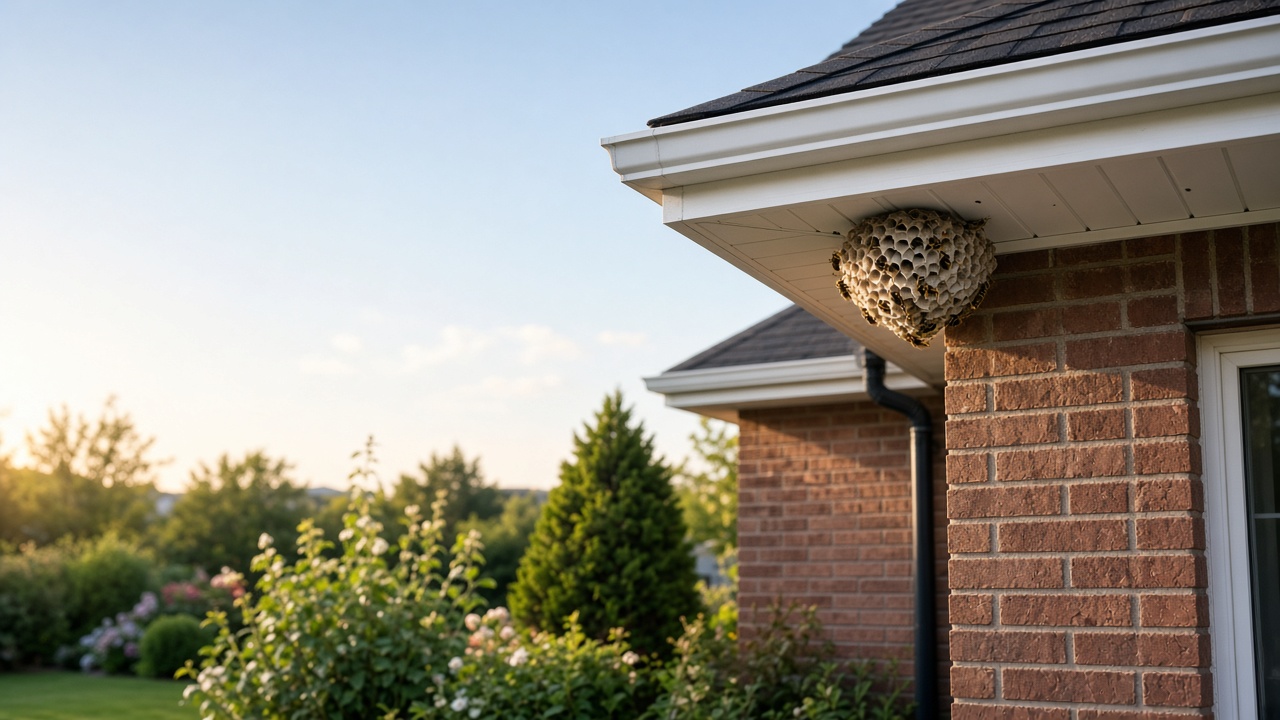
KW Pest Control removes wasp and yellowjacket nests from homes and businesses in Kitchener, Waterloo, Cambridge and Guelph. We treat nests in eaves, soffits, walls, sheds, decks and the ground. Wasp nest removal starts at about $200 before HST. If you have honeybees or other small bees, please call a local beekeeper first.
Knowing what you have changes what should happen next.
Bees are important pollinators. A beekeeper can often collect a honeybee swarm alive, so that’s the first call. If a beekeeper can’t help, or the bees have moved into a wall, call us and we’ll talk through the options.
| Insect | What it looks like | Where it nests | What to do |
|---|---|---|---|
| Yellowjacket | Bright yellow and black, smooth, about 1.5 cm | Wall voids, soffits, the ground, sheds | Call us for nest removal |
| Paper wasp | Long legs that dangle in flight, slimmer body | Open umbrella-shaped combs under eaves, railings and decks | Call us for nest removal |
| Bald-faced hornet | Black and white, larger | Large grey paper nests in trees, hedges and under eaves | See hornet nest removal |
| Mud dauber | Thin “thread” waist, black or metallic blue | Small mud tubes on walls and ceilings | Rarely aggressive; we can remove nests |
| Honeybee | Fuzzy, golden-brown, smaller | Hives, hollow trees, swarms on branches | Call a local beekeeper first |
| Bumblebee | Large, fuzzy, black and yellow | Small nests in the ground or old rodent burrows | Usually best left alone |
A wasp nest starts in spring with a single queen. Through June and July the colony grows to hundreds or thousands of workers, and the nest gets bigger every week. In August the colony stops raising young and the workers look for sugar instead: pop cans, fruit, garbage and patio food. That’s when wasps become aggressive and most stings happen. Nests die off with the first hard frost, and the old nest isn’t reused, but new queens overwinter and start again nearby the next spring. Read more on our blog: why wasps are aggressive in late summer.
A single sting is painful but usually harmless for most people: wash it, apply a cold pack and watch for swelling. Yellowjackets can sting more than once, and a disturbed ground nest can send dozens of wasps out at the same time, which is why lawn mowers and string trimmers set off so many attacks. Anyone with a known sting allergy should keep their epinephrine auto-injector nearby in summer and stay well away from nests. Swelling of the face or throat, trouble breathing or dizziness after a sting is a medical emergency: call 911.
Wasps aren’t all bad. They eat caterpillars, flies and other garden pests, so a small paper wasp nest at the back of a yard, away from doors and play areas, can often be left alone until frost. The nests worth treating are the ones near doors, decks, play structures, windows and walkways, and anything inside the walls of your home.
Wasps returning to the nest after treatment are normal for a day or two. They’re foragers that were out when the nest was treated, and they contact the product when they return.
Small, exposed paper wasp nests in early spring can sometimes be knocked down safely. Large nests, nests inside walls or in the ground, and anything high up are a different story. Spraying a wall entrance can push wasps into the house. Sealing the hole traps them inside, where they chew through drywall. Anyone allergic to stings should never try. Read more: can you remove a wasp nest yourself?
Typical prices before HST:
See the pest control cost guide for other services.
| Nest type | Typical range |
|---|---|
| Paper wasp or yellowjacket nest (exposed) | From about $200 |
| Mud dauber nests | From about $200 |
| Structural nest (in a wall, soffit or siding) | From about $250 |
| Each additional nest at the same visit | About $50 to $75 |
| Honeybees | Only after a beekeeper has been tried; call to discuss |
Patios, restaurants, playgrounds, schools and multi-unit buildings can’t afford a nest by the door. We treat nests at commercial properties in Kitchener, Waterloo, Cambridge and Guelph during weekday hours. See commercial pest control.
KW Pest Control serves homes and businesses in four cities: Kitchener, Waterloo, Cambridge and Guelph. That includes downtown Kitchener and Doon, Uptown Waterloo and Beechwood, Galt, Preston and Hespeler in Cambridge, and every Guelph neighbourhood from the Ward to the south end. Not sure we cover your street? Call 519-957-1766 and ask.
Kitchener · Waterloo · Cambridge · Guelph
Call 519-957-1766 and tell us what you’re seeing. Estimates over the phone are free, and an inspection is required for an exact quote on larger jobs. The office is open Monday to Friday, 8:30 a.m. to 5 p.m.; leave a message after hours and we’ll call you back the next business day. Call 519-957-1766 Send Us a Message

Local pest control for homes and businesses in Kitchener, Waterloo, Cambridge and Guelph. Licensed & insured. Free phone estimates.
Mice · Wasps · Ants · Bed bugs
Spiders · Fleas · Cockroaches · Commercial
519-957-1766
Mon–Fri 8:30 a.m.–5 p.m.
Licensed & insured
Kitchener · Waterloo · Cambridge · Guelph