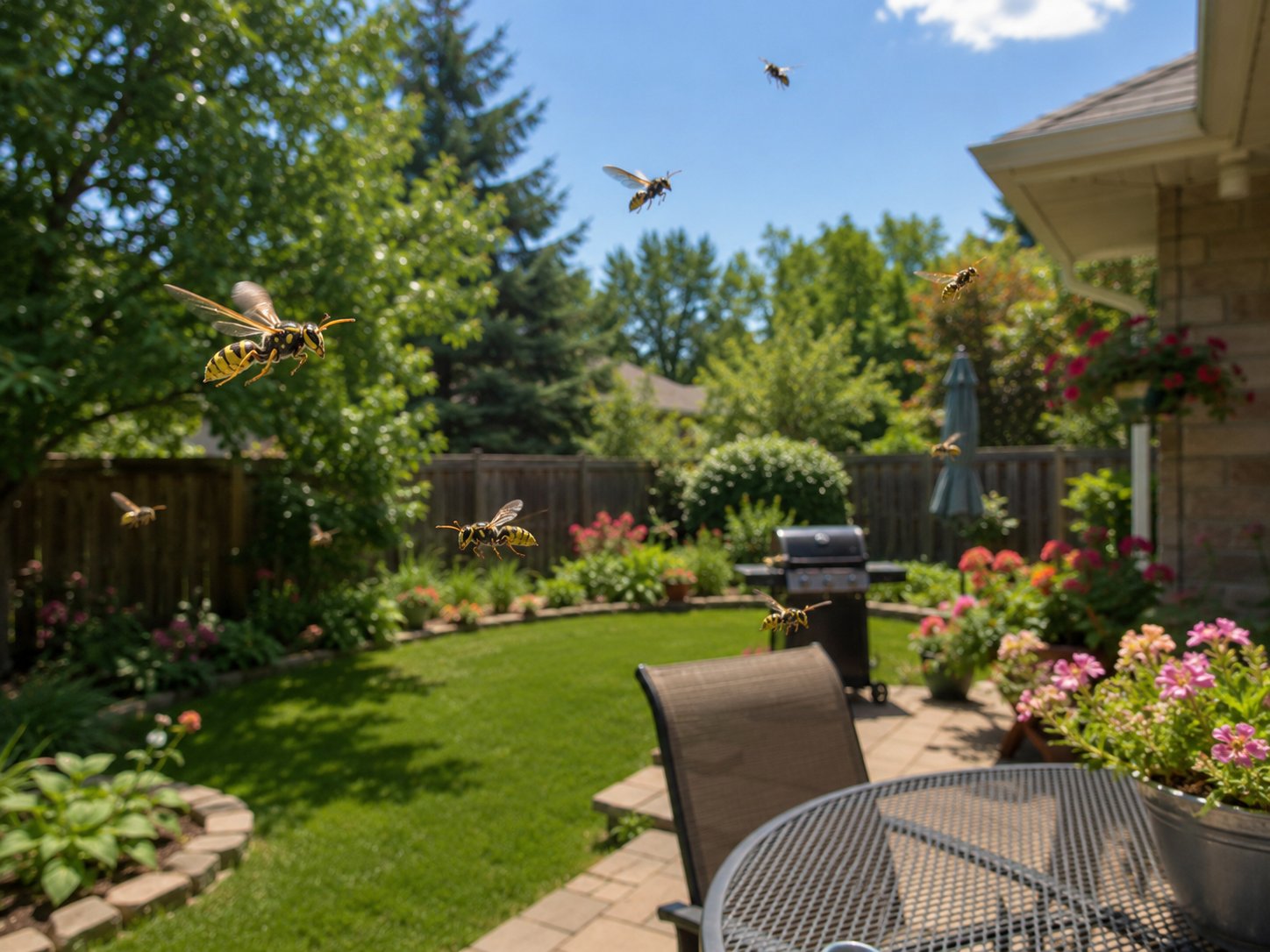
Finding a wasp nest on your property can quickly turn an enjoyable summer into a stressful experience. Whether it’s attached to your deck, tucked beneath your soffit, hidden inside your siding, or hanging from a tree branch, a wasp nest poses a real risk to your family, pets, and visitors. Many homeowners in Kitchener discover nests while mowing the lawn, cleaning the gutters, or relaxing on the patio, often after wasps have already become aggressive.
Knowing what to do when you find a wasp nest can help you avoid painful stings and prevent a small problem from becoming a much larger infestation. While some nests appear out in the open, others are concealed inside wall cavities, rooflines, or other structural spaces where hundreds or even thousands of wasps may be living unnoticed.
If you’ve discovered a wasp nest on your property, here’s what you should know before attempting to remove it yourself.
Why Wasps Are So Active in Kitchener During Summer
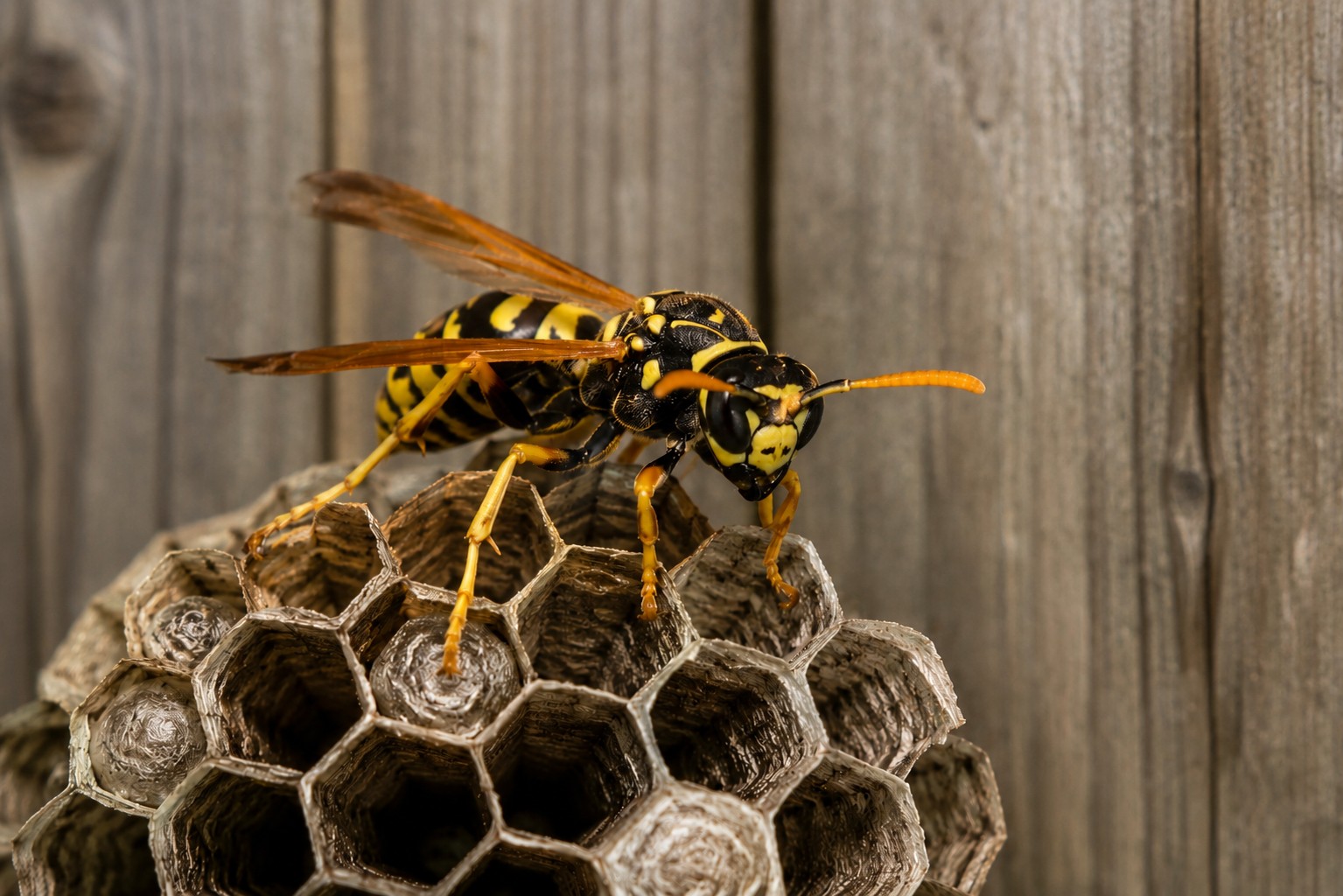
Wasps become increasingly active throughout late spring and summer as their colonies grow. A queen begins building the nest alone during the spring, laying eggs and raising the first generation of worker wasps. Once those workers emerge, they take over nest construction and food gathering while the queen focuses entirely on producing more offspring.
By mid to late summer, a colony can contain hundreds or even thousands of wasps depending on the species. At this stage, nests grow rapidly, and wasps become much more defensive of their colony.
Kitchener’s warm summers, mature neighbourhoods, abundant green spaces, and large number of decks, sheds, and roof overhangs provide ideal nesting locations for several common wasp species.
Where Wasps Commonly Build Nests
Wasps are surprisingly adaptable and can establish nests almost anywhere that offers protection from the weather. Some of the most common nesting locations include:
- Under decks and porches
- Roof soffits and fascia boards
- Inside wall cavities
- Behind shutters
- Under eaves
- Attic vents
- Garden sheds
- Fence posts
- Children’s playsets
- Trees and shrubs
- Barbecue covers
- Mailboxes and utility boxes
Many homeowners never notice a hidden nest until they accidentally disturb it while performing routine yard maintenance.

What Should You Do If You Find a Wasp Nest?
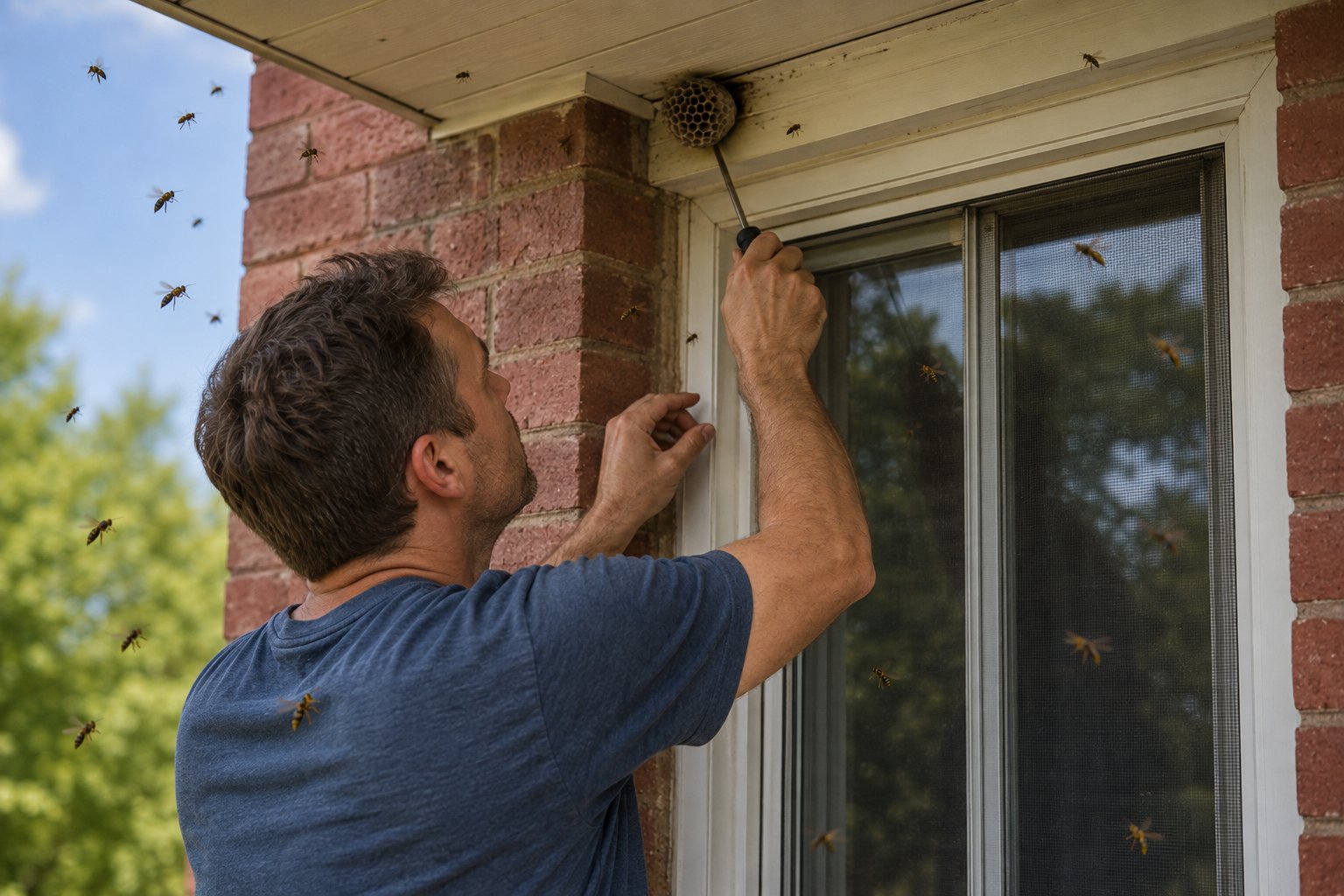
The first step is simple: stay away from it. Avoid poking the nest, spraying it with water, or attempting to knock it down. Even a small amount of vibration can cause dozens of worker wasps to emerge and aggressively defend the colony. Keep children and pets away from the area until the nest has been removed. If the nest is located near a frequently used doorway, patio, or walkway, consider temporarily avoiding that area until professional treatment has been completed.
Don’t Attempt DIY Wasp Nest Removal
Many homeowners search online for homemade wasp removal methods involving soap, gasoline, fire, boiling water, or household insect sprays. These methods are not only unreliable but can also be extremely dangerous. Wasps communicate with one another using alarm pheromones. When one worker senses danger, it releases chemicals that signal the rest of the colony to attack.
Attempting to spray or physically remove a nest often results in multiple wasps swarming simultaneously. Even individuals who have never experienced an allergic reaction before can suffer serious medical complications after receiving multiple stings. Professional equipment and protective clothing exist for a reason.
Signs You May Have a Hidden Wasp Nest
Not every nest is visible. Structural nests often remain completely hidden behind siding or inside walls while worker wasps enter and exit through tiny openings. You may have a concealed nest if you notice repeated wasp activity around one specific location.
For example, dozens of wasps flying into a small gap beside a window frame, beneath the soffit, or through a crack in the brick usually indicates an active colony hidden behind the building materials. You may also hear faint buzzing coming from inside a wall or ceiling during quiet periods, especially on warm afternoons when the colony is at its busiest. In some cases, homeowners notice increasing wasp activity indoors after insects accidentally find their way through wall voids into the living space.
Unlike exposed paper nests, hidden structural nests continue growing out of sight and often become much larger before they are discovered.
Why Timing Matters
The sooner a wasp nest is treated, the easier it generally is to eliminate. A small nest discovered in early summer contains far fewer wasps than one found in late August or September.
As colonies mature, they become increasingly protective of their queen and developing brood. This means disturbing the nest later in the season carries a greater risk of aggressive behaviour. Early treatment also reduces the number of worker wasps actively foraging around your property.
What Happens During Professional Wasp Nest Removal?
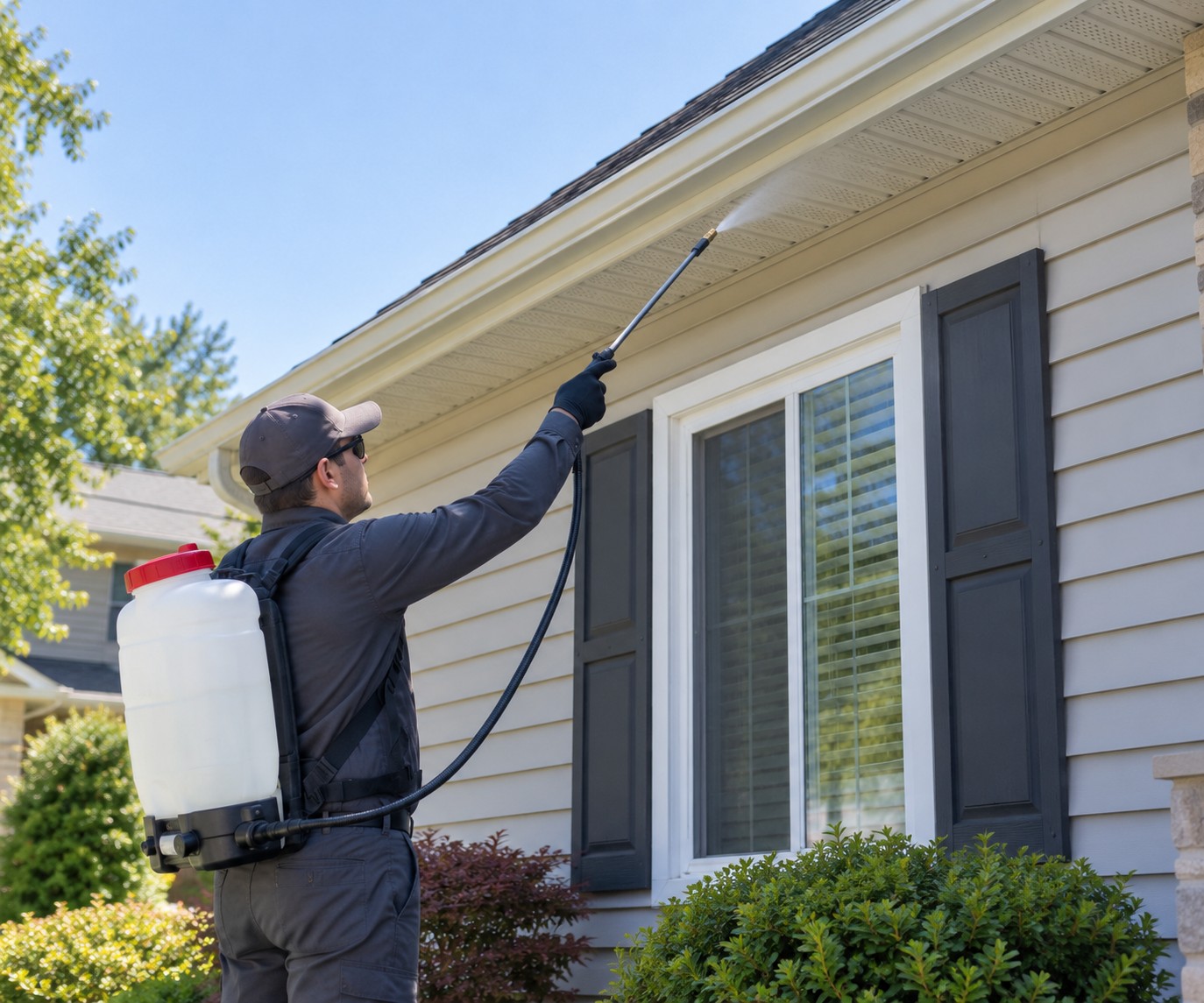
Professional wasp removal begins with identifying the species and locating the entire colony. If the nest is exposed, specialized insecticide products are applied directly to eliminate the colony quickly and safely. When nests are hidden inside walls, soffits, or other enclosed spaces, technicians use specialized equipment designed to deliver treatment directly into the nesting cavity while minimizing exposure to occupants.
Once activity has completely stopped, accessible nests can often be removed to improve appearance and reduce the chance of attracting other insects. If structural entry points contributed to the infestation, recommendations may also be made to help reduce future nesting opportunities.
Can Wasps Return?
Although old paper nests are generally not reused the following year, new queens often return to the same general area if conditions remain favourable. Properties that have experienced previous infestations frequently see new nests built under the same deck, beneath the same soffit, or inside similar sheltered locations.
Regular inspections during the spring can help identify small starter nests before they become established. Keeping exterior gaps sealed, repairing damaged siding, and reducing sheltered nesting locations can also discourage future colonies.

Protecting Your Family From Wasp Stings
Wasp stings are painful for most people, but they can become life-threatening for individuals with allergies. If someone experiences difficulty breathing, swelling of the throat, dizziness, or widespread hives after being stung, seek emergency medical attention immediately.
Even without allergies, multiple stings can require medical treatment. Professional removal greatly reduces the chance of accidental encounters throughout the rest of the summer.
Preventing Future Wasp Problems
While it’s impossible to eliminate every wasp from your yard, reducing attractants can lower the chances of future nests developing around your home.
Keep outdoor garbage containers tightly sealed and rinse food residue from recycling bins regularly. Clean up fallen fruit beneath trees, cover sugary drinks during backyard gatherings, and avoid leaving pet food outdoors for extended periods. Inspect your home’s exterior each spring for small starter nests under eaves, deck railings, sheds, and play structures. Sealing gaps around soffits, vents, siding, and utility penetrations can also prevent wasps from accessing hidden structural spaces.
These simple maintenance habits make your property less inviting while helping you detect problems before colonies grow large.
Why Choose Professional Wasp Removal?
Professional wasp removal offers far more than simply eliminating the visible nest. Experienced technicians understand where different species prefer to nest, how to safely access difficult locations, and which treatment methods are most effective for exposed versus hidden colonies. They also have the protective equipment needed to complete the job safely, reducing the risk of multiple stings or incomplete treatment. For homeowners, this means greater peace of mind and a much lower chance of wasps returning to the same location later in the season.
Contact KW Pest Control for Wasp Nest Removal in Kitchener
If you’ve discovered a wasp nest on your home or property, don’t take unnecessary risks trying to remove it yourself. Whether the nest is hanging from your deck, hidden inside your soffit, or tucked behind your siding, prompt professional treatment is the safest and most effective solution.
At KW Pest Control, we provide fast, professional wasp nest removal throughout Kitchener and the surrounding communities. Our experienced technicians safely eliminate active nests, identify hidden colonies, and help reduce the risk of future infestations so you can enjoy your property again with confidence.
Contact KW Pest Control to schedule your wasp nest removal service and protect your home and family from aggressive wasps.