
Rats are one of the most concerning pests homeowners can encounter. These rodents are known for their ability to squeeze through small openings, contaminate food, damage building materials, and reproduce quickly when conditions are favourable. Whether you have noticed scratching noises in your walls, discovered droppings in your basement, or spotted a rat running through your backyard, taking action early can help prevent a small rodent problem from developing into a serious infestation.
Rat infestations can occur in residential neighbourhoods throughout Kitchener, Waterloo, and the surrounding areas. Older homes, properties near construction sites, buildings with accessible crawl spaces, and houses with outdoor food sources may be particularly vulnerable. Rats are highly adaptable and can survive in urban and suburban environments as long as they have access to food, water, and shelter.
Understanding how rats enter homes, where they hide, and which removal methods are effective is an important part of protecting your property. This guide explains the warning signs of a rat infestation, common causes of rat activity, professional rat control methods, and practical steps homeowners can take to prevent future problems.
Why Are Rats a Problem in Kitchener?
Rats are well adapted to living near people. Residential neighbourhoods provide many of the resources they need, including food waste, garbage bins, compost piles, gardens, outdoor structures, and protected nesting locations. In Kitchener, rats may establish themselves around garages, sheds, decks, foundations, and other sheltered areas. They can also travel through underground burrows, drainage systems, and openings around building foundations.
One of the most common rat species found in Southern Ontario is the Norway rat, also known as the brown rat. These rodents are strong burrowers that frequently nest underground, beneath concrete slabs, and around building foundations. They may enter basements, crawl spaces, garages, and other accessible areas when suitable openings are available.
Rat activity can occur throughout the year. During colder weather, rodents may seek protected locations where temperatures are more stable and food remains accessible. However, rats can also remain active outdoors during winter, particularly when reliable food sources are available. Properties with accessible garbage, bird feeders, pet food, or accumulated debris may experience ongoing rat activity regardless of the season.
Common Signs of a Rat Infestation
Rats are generally cautious animals that prefer to remain hidden. Homeowners may notice evidence of their presence long before seeing a live rat. Recognizing the early warning signs can help identify a problem before the infestation becomes more established.
Rat Droppings Around the Home
Rat droppings are one of the clearest indicators of rodent activity. They are typically dark, elongated, and noticeably larger than mouse droppings. Droppings may appear along basement walls, inside garages, beneath kitchen cabinets, around stored items, or near areas where rats are feeding.
Fresh droppings are often dark and moist, while older droppings may become dry and faded. However, appearance alone cannot reliably determine how recently rats were active. If droppings are repeatedly appearing in the same area, it may indicate an established travel route or nearby nesting location. Avoid sweeping or vacuuming dry rodent droppings, as this can release contaminated particles into the air. Follow appropriate rodent cleanup and disinfection procedures.
Scratching and Movement Inside Walls
Rats are most active during the evening and nighttime hours, although they may also move around during the day. Homeowners sometimes report scratching, scurrying, or gnawing noises coming from walls, ceilings, basements, and other concealed spaces.
Because rats are larger than mice, their movements may produce heavier sounds. However, noise alone is not enough to identify the species responsible. A professional rodent inspection can help determine whether the activity is caused by rats, mice, squirrels, or another animal.
Gnaw Marks and Property Damage
Rats have continuously growing front teeth and must gnaw on materials to maintain them. They may chew through wood, plastic, insulation, cardboard, and other relatively soft building materials. Electrical wiring can also be damaged, creating potentially serious safety concerns.
Gnaw marks may appear around foundation openings, garage doors, wooden structures, stored belongings, and food packaging. Repeated chewing around an opening may indicate that rats are attempting to enlarge an existing entry point.
Burrows Around Foundations and Outdoor Structures
Norway rats commonly establish underground burrows. These openings may appear beside foundations, beneath decks, around sheds, under concrete walkways, or near retaining walls. A typical rat burrow entrance may measure approximately 5 to 10 centimetres across, although the size can vary.
Freshly disturbed soil, repeated digging, and smooth openings with worn edges may indicate active use. Not every hole in the ground belongs to a rat, so identifying the animal before beginning treatment is important.
Grease Marks and Rodent Pathways
Rats often follow consistent travel routes along walls, fences, foundations, and other structures. Over time, oils and dirt from their fur can leave dark rub marks on frequently used surfaces.
Outdoors, repeated movement may also create narrow pathways through grass or vegetation. These signs can help pest control technicians identify areas where rats are travelling between nesting sites and food sources.
How Do Rats Get Inside Houses?
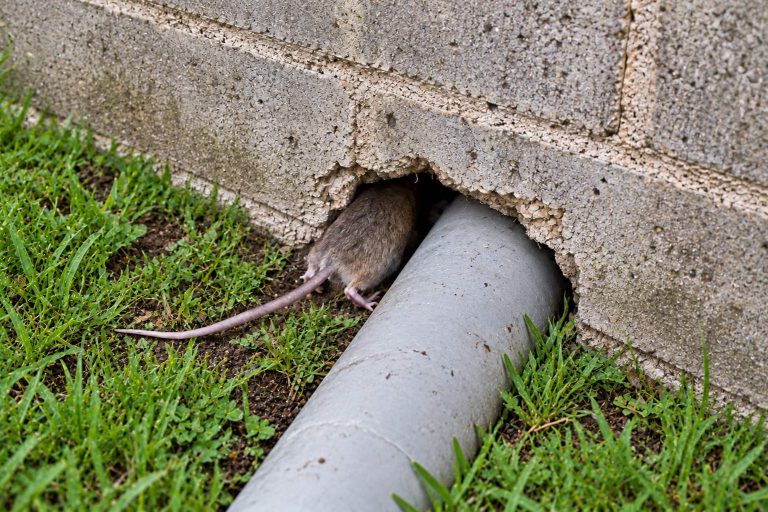
Rats are capable of entering buildings through surprisingly small openings. An adult rat may be able to squeeze through a gap approximately 2 centimetres wide, depending on its size and the shape of the opening. Common entry points include deteriorating foundation openings, damaged vents, gaps around plumbing penetrations, poorly sealed garage doors, and openings around utility lines.
Older homes may have foundation cracks, damaged masonry, or deteriorating materials that provide access to basements and crawl spaces. Rats can also exploit openings beneath exterior doors and around additions where building materials meet.
In some situations, rodents may enter through damaged drainage infrastructure or other connected underground spaces. Finding the entry point is an important part of successful rat removal. Eliminating the rats already inside a home may provide temporary relief, but additional rodents can enter if accessible openings remain.
Where Do Rats Nest Around Homes?
Rats generally prefer sheltered locations that provide protection from predators, weather, and human activity. Outside, Norway rats commonly nest beneath sheds, decks, concrete slabs, woodpiles, and dense vegetation. They may also create burrows beside foundations or underneath outdoor structures.
Inside buildings, nesting locations can include basements, crawl spaces, wall voids, utility areas, and storage rooms. Rats may construct nests using shredded paper, insulation, cardboard, fabric, and other soft materials.
An established infestation may involve multiple nesting and feeding locations, particularly when rats have access to several parts of a property. This is why effective rat control requires more than simply placing a trap where one rat was seen.
Why Rat Infestations Should Be Treated Quickly
Rats are not just an inconvenience. Their presence can create sanitation concerns and cause property damage.
Health and Contamination Risks
Rats can carry pathogens that may contaminate surfaces, food, and stored materials through droppings, urine, and other bodily waste. Rodent activity in kitchens, pantries, and food storage areas is particularly concerning because contaminated items may need to be discarded.
Rat urine and droppings can also contribute to unpleasant odours and unsanitary conditions in enclosed spaces. Direct contact with rats or contaminated materials should be avoided.
Damage to Electrical Wiring and Insulation
Rats may chew through electrical wire insulation, creating a potential fire hazard. They can also damage insulation, wooden framing, stored belongings, and plastic piping. In some cases, the damage remains hidden inside walls or inaccessible areas until the infestation has become established.
Rapid Reproduction
Rats can reproduce throughout much of the year when food, shelter, and environmental conditions are suitable. Female rats can produce several litters annually, with multiple young in each litter.
This means a relatively small population can increase substantially if the infestation is left untreated. Early intervention is generally easier than addressing a large, established rodent population.
How Does Professional Rat Removal Work?
Professional rat control focuses on identifying rodent activity, reducing the existing population, and addressing conditions that allow rats to survive around the property. The treatment approach depends on the severity of the infestation, the location of the rodents, and the structure of the building.
Step 1: Inspecting the Property
The first step involves evaluating the areas where rat activity has been reported. A pest control technician may examine accessible basements, garages, foundation areas, exterior walls, and other potential nesting or travel locations.
Evidence such as droppings, burrows, gnaw marks, and rub marks can help determine where rodents are active. The inspection also helps identify potential entry points and environmental conditions contributing to the problem.
Step 2: Developing a Rat Control Plan
Once the activity has been assessed, an appropriate treatment plan can be developed. The plan may involve strategically positioned rodent traps, tamper-resistant bait stations, or other approved rodent control methods.
Treatment selection depends on the location of the infestation and whether children, pets, or non-target animals could access the area. Professional technicians use products and equipment according to applicable regulations and label requirements.
Step 3: Targeted Rodent Treatment
Rat control products and equipment are placed in locations where rodents are likely to encounter them. Rats are naturally cautious around unfamiliar objects, which means it may take time for them to approach newly installed traps or bait stations.
Proper positioning is important because rats frequently travel along walls and established pathways rather than crossing large open areas. Treatment may need to be adjusted based on the amount of rodent activity observed.
Step 4: Monitoring and Follow-Up
An established rat infestation may require additional monitoring or follow-up visits. Rodent activity is assessed to determine whether the population is declining and whether further treatment is necessary.
Homeowners should understand that rat removal is not always immediate. The amount of time required depends on the infestation size, available food sources, nesting locations, and treatment methods used.
Step 5: Addressing Entry Points and Contributing Conditions
Once rodent activity has been brought under control, attention should be given to openings and conditions that may allow future infestations. Potential entry points can be sealed using suitable rodent-resistant materials.
However, sealing should be carefully timed when rats may still be inside the structure. Closing active openings prematurely can trap rodents indoors or cause them to create alternative routes. Reducing accessible food sources and removing favourable nesting conditions are equally important parts of long-term prevention.
Can You Get Rid of Rats Yourself?
Some homeowners attempt to control rats using store-bought traps, bait products, or other DIY methods. While these products may catch individual rodents, eliminating an established infestation can be considerably more difficult. Rats are intelligent, cautious animals that often avoid unfamiliar objects. Poorly positioned traps may remain untouched, while improper bait use can create unnecessary risks for children, pets, and wildlife.
Another common issue is failing to identify the source of the infestation. Catching one or two rats does not necessarily mean the entire population has been eliminated, particularly if active burrows or entry points remain. Professional rat control provides a more comprehensive approach by evaluating the property, identifying rodent pathways, and developing a treatment strategy based on the infestation.
How Long Does Rat Removal Take?
The time required to control a rat infestation varies from property to property. A relatively small problem may show improvement within the first couple of weeks, while a more established infestation may require several visits and a longer monitoring period. The timeline can be affected by the number of rats present, available food sources, the accessibility of nesting locations, and whether rodents are continuing to enter from outside.
Homeowners should also expect that some rodent activity may continue during the early stages of treatment. A noticeable reduction in activity is encouraging, but monitoring is important before determining whether the infestation has been resolved.

How to Prevent Rats From Returning
Preventing another infestation requires reducing the resources that attract rats to residential properties.
Keep Garbage and Food Waste Secure
Rats are opportunistic feeders that take advantage of accessible food sources. Garbage should be stored in durable containers with properly fitted lids. Food waste should not be left exposed outdoors, and spills around garbage storage areas should be cleaned promptly.
Pet food should be brought indoors after feeding, and bird seed accumulating beneath feeders should be removed regularly. Compost should be managed carefully to avoid providing an accessible food source for rodents.
Maintain Your Yard and Outdoor Structures
Overgrown vegetation, accumulated debris, and cluttered storage areas can provide shelter for rats. Keeping grass trimmed, maintaining landscaping, and removing unnecessary debris can make the property less attractive.
Firewood and other stored materials should be organized to reduce concealed nesting opportunities. Homeowners should also periodically check beneath decks, sheds, and outdoor structures for evidence of digging or burrow activity.
Seal Potential Entry Points
Inspect the exterior of your home for openings around foundations, doors, vents, and utility penetrations. Damaged weather stripping, loose vent covers, and deteriorating building materials should be repaired.
Rodent-resistant screening and appropriate sealing materials can help prevent rats from accessing vulnerable areas. Because rats can chew through many common materials, ordinary expanding foam alone is generally not a reliable rodent-proofing solution.
Address Moisture and Water Sources
Rats require access to water and may be attracted to leaking outdoor faucets, standing water, and poorly maintained drainage areas. Repairing leaks and improving drainage can help reduce conditions that support rodent activity.
Are Rats More Common During Fall and Winter?
Rat problems can become more noticeable as temperatures begin to drop in Ontario. During fall and winter, rodents may seek sheltered environments where they can avoid harsh weather and access dependable food sources. Basements, garages, crawl spaces, and protected areas beneath buildings may become attractive nesting locations.
However, rats do not disappear during summer. Warm weather can support breeding, outdoor nesting, and increased activity around garbage and gardens. For this reason, homeowners in Kitchener should remain aware of potential rodent activity throughout the year.
When Should You Call a Rat Exterminator?
If you discover rat droppings, active burrows, repeated scratching noises, or evidence of gnawing, it is worth arranging a professional assessment. A single rat sighting does not always indicate a large infestation, but it should not be ignored, especially when other signs of activity are present.
Professional assistance is particularly important when rats are entering living spaces, contaminating food storage areas, or causing damage to electrical wiring and building materials. The sooner the source of the activity is identified, the easier it may be to prevent further damage and population growth.
Book Professional Rat Treatment in Kitchener With KW Pest Control
Rat infestations can be stressful for homeowners, especially when rodents are hiding inside walls, burrowing around foundations, or repeatedly returning to the property. Although rats are persistent pests, professional treatment combined with preventative measures can help bring an infestation under control.
At KW Pest Control, we provide professional rat control services for homeowners in Kitchener, Waterloo, and surrounding communities. Our pest control technicians can assess signs of rat activity, identify common nesting and travel areas, and recommend appropriate treatment methods based on the conditions at your property.
Whether you have discovered rat droppings in your basement, noticed burrows around your foundation, or heard scratching noises inside your walls, addressing the problem early can help protect your home from further damage.
Reach out to KW Pest Control to schedule professional rat control treatment in Kitchener. Our team can help you take the next steps toward controlling rodent activity and reducing the risk of future infestations.