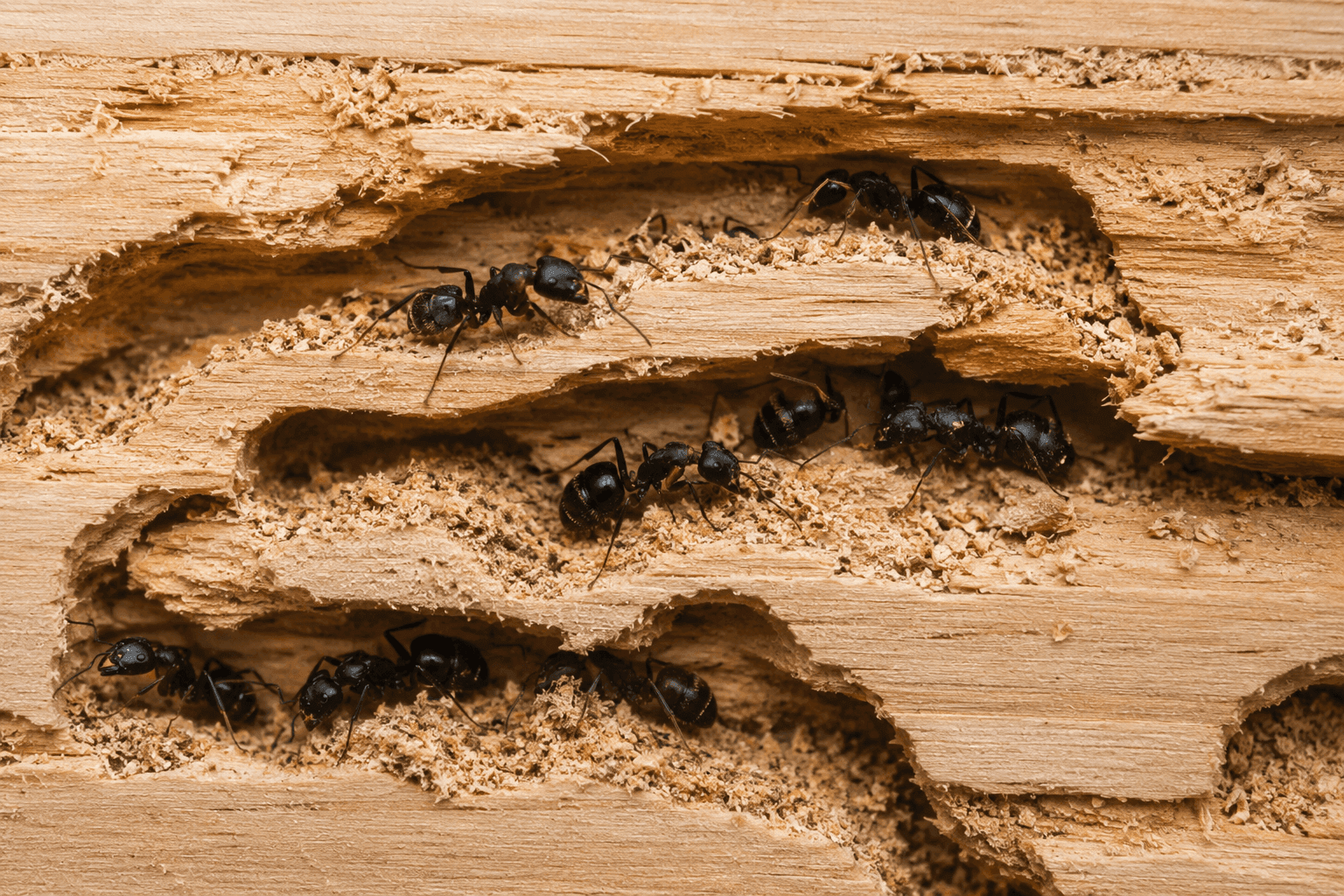
Carpenter ants are among the most concerning pests that homeowners in Kitchener can encounter. While they do not eat wood like termites, they excavate it to build nests, which can lead to structural damage if the infestation is left untreated. Every spring and summer, homeowners throughout Kitchener, Waterloo, and Cambridge begin noticing large black ants crawling around kitchens, bathrooms, basements, and exterior walls. In many cases, these sightings are the first indication of a much larger hidden colony.
Understanding the warning signs of carpenter ants and knowing how to address the problem quickly can help protect your home from costly repairs and ongoing infestations.
What Are Carpenter Ants?
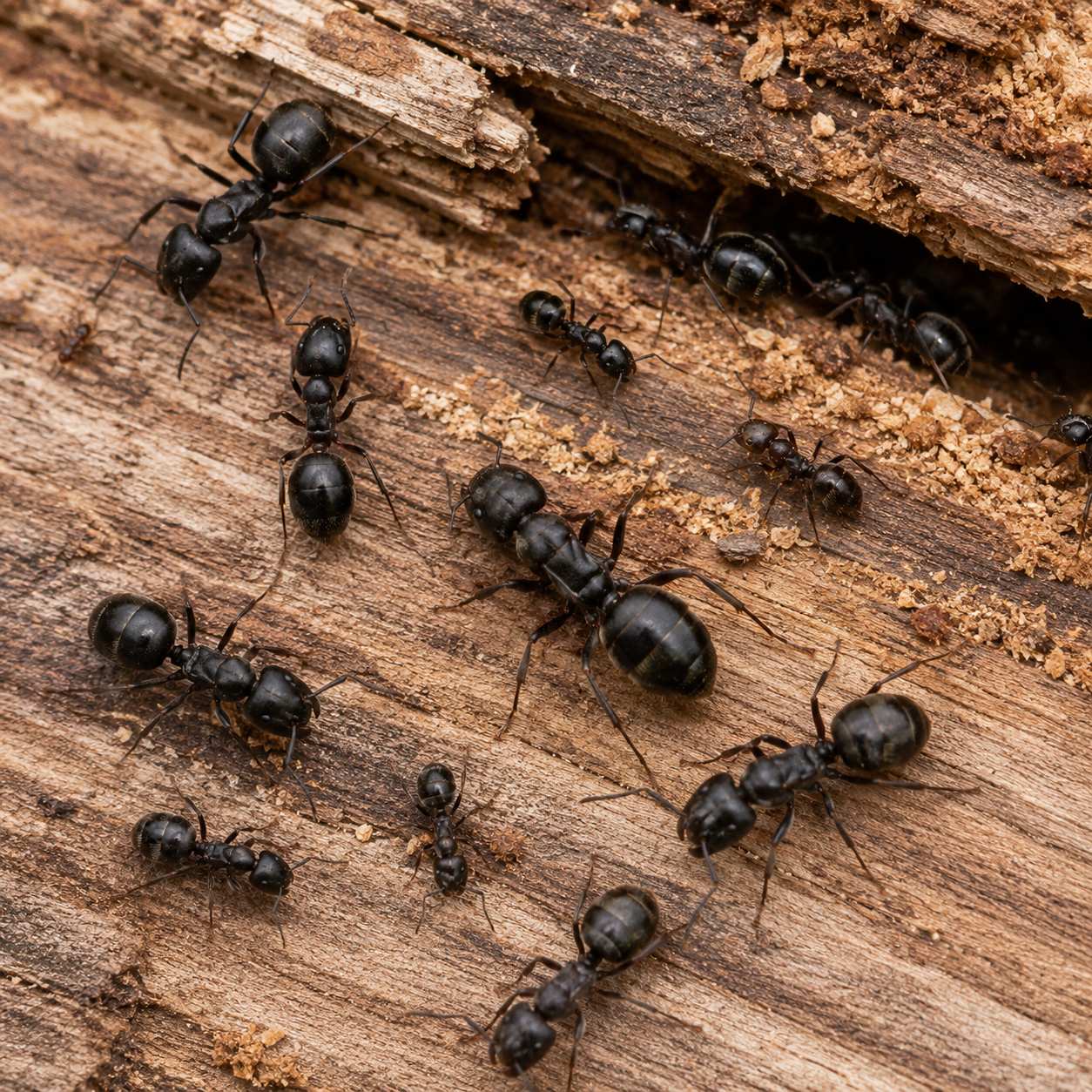
Carpenter ants are one of the largest ant species found in Ontario. Worker ants can range from approximately 6 mm to 13 mm in length and are usually black, although some colonies may have reddish or dark brown colouring.
Unlike termites, carpenter ants do not consume wood for nutrition. Instead, they tunnel through wood to create smooth galleries where the colony can live and expand. Over time, large colonies can hollow out structural wood, especially in areas affected by moisture.
Carpenter ants are particularly common in Kitchener due to the area’s mature trees, seasonal moisture, and wide range of residential housing styles.
Why Carpenter Ants Invade Homes
Carpenter ants are attracted to environments that provide moisture, shelter, and access to food. Moisture-damaged wood is especially appealing because it is softer and easier for ants to excavate. Common conditions that attract carpenter ants include:
- Leaking windows
- Roof leaks
- Damaged soffits and fascia
- Wet deck boards
- Poorly ventilated attics
- Plumbing leaks
- Damp basements
A carpenter ant colony may begin outdoors in a tree stump, fence post, landscape timber, or fallen log. As the colony grows, satellite nests often develop inside homes. This is why homeowners frequently see carpenter ants indoors even when the primary colony is located outside.
Signs of Carpenter Ants in Your Home
Carpenter ants are often active behind walls and inside hidden structural spaces, making infestations difficult to detect early. Fortunately, there are several warning signs homeowners can watch for.
Large Black Ants Indoors
One of the most obvious indicators is regularly seeing large black ants inside your home. Occasional sightings may not necessarily indicate an infestation. However, repeatedly finding carpenter ants in kitchens, bathrooms, basements, or upper floors usually warrants further investigation.
Spring and early summer are often when homeowners first notice activity as workers become more active searching for food.
Frass Around Walls and Trim
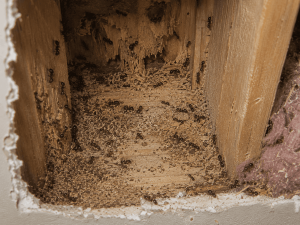
Carpenter ants create tunnels by removing wood and debris. The material they excavate is called frass. Frass resembles coarse sawdust and may contain:
- Wood shavings
- Insulation fragments
- Insect body parts
- Dead ants
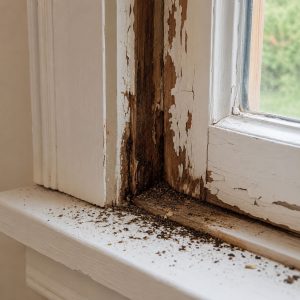
Unlike sawdust created by woodworking, carpenter ant frass is often found in small piles beneath wall voids, window frames, door casings, or damaged wood. Finding frass is one of the strongest indicators of an active carpenter ant nest.
Rustling Sounds in Walls
Large carpenter ant colonies can sometimes produce faint rustling or crackling sounds inside walls. At night, when the house is quiet, homeowners may hear movement coming from wall cavities or ceilings. The sound occurs as workers move through tunnels and excavate additional nesting space.
Winged Ants Indoors
Mature carpenter ant colonies produce reproductive ants known as swarmers. These winged ants emerge to establish new colonies. Finding winged ants inside your home is often a sign that a mature colony is already present somewhere within the structure. This should never be ignored, as established colonies can continue growing rapidly.
Increased Activity Near Moisture
Carpenter ants are strongly associated with moisture. There may be hidden moisture damage supporting a nest nearby if you consistently see ants near:
- Bathrooms
- Kitchens
- Laundry rooms
- Window frames
- Basements
Where Carpenter Ants Nest
Carpenter ants prefer protected locations with access to moisture and wood. Common nesting sites include:
Wall Voids
Wall cavities provide excellent protection from predators and weather. Colonies can expand significantly before becoming visible.
Attics
Roof leaks and poor ventilation create ideal conditions for carpenter ant activity. Attic infestations are particularly common in older homes.
Window and Door Frames
Small leaks around windows and doors often lead to wood rot, creating perfect nesting conditions.
Decks and Porches
Outdoor wooden structures are common carpenter ant nesting sites. Moisture exposure gradually softens wood, making it easier for colonies to establish themselves.
Tree Stumps and Landscaping
Many carpenter ant infestations begin outdoors. Rotting tree stumps, landscape ties, and dead trees frequently serve as primary nesting locations before ants move closer to the home.
Why DIY Carpenter Ant Treatments Often Fail
Many homeowners attempt to eliminate carpenter ants using sprays purchased from hardware stores. While sprays may kill visible ants, they rarely reach the colony itself. The ants you see are typically only a small portion of the overall population. The queen, brood, and majority of workers remain hidden deep within nesting galleries. Without eliminating the colony, the infestation often continues.
Another challenge is that carpenter ants frequently maintain multiple satellite nests. Killing workers in one area may not affect colonies elsewhere in the structure. Successful treatment requires locating nesting sites and targeting the colony directly.
How Professional Carpenter Ant Control Works
Professional carpenter ant treatment focuses on identifying the source of the infestation rather than simply treating visible activity. The process typically begins with a detailed inspection of the property. Technicians look for:
- Ant trails
- Frass deposits
- Moisture damage
- Exterior entry points
- Potential nesting areas
Once activity is located, targeted treatments are applied to eliminate active colonies and reduce future activity. Exterior inspections are equally important because many infestations originate outdoors. Treating both interior and exterior activity provides the most effective long-term control.
Preventing Carpenter Ant Infestations
Prevention begins by reducing the conditions carpenter ants need to survive. Moisture management is one of the most important factors. Homeowners should promptly repair:
- Roof leaks
- Plumbing leaks
- Damaged siding
- Faulty gutters
- Window leaks
Firewood should be stored away from the home whenever possible. Tree branches that contact the roof should be trimmed back to reduce access points. Regular inspections of decks, porches, and exterior wood structures can also help identify problems before colonies become established.
Why Early Treatment Matters
Carpenter ant colonies grow over time. What begins as a small infestation can eventually expand into multiple satellite nests throughout the structure. The longer a colony remains active, the more wood it may excavate.
Although carpenter ants do not cause damage as quickly as termites, years of activity can weaken structural components and lead to costly repairs. Early detection and treatment are always more affordable than extensive restoration work later.
Professional Carpenter Ant Control in Kitchener
If you are seeing large black ants, finding piles of frass, or suspect carpenter ants may be nesting in your home, professional treatment is the best way to eliminate the problem before it grows. At KW Pest Control, we provide professional carpenter ant treatments throughout Kitchener, Waterloo, Cambridge, and surrounding communities. Our team identifies nesting locations, targets active colonies, and helps protect your home from future infestations.
Contact KW Pest Control today to schedule a carpenter ant inspection and take the first step toward protecting your home from hidden structural damage.