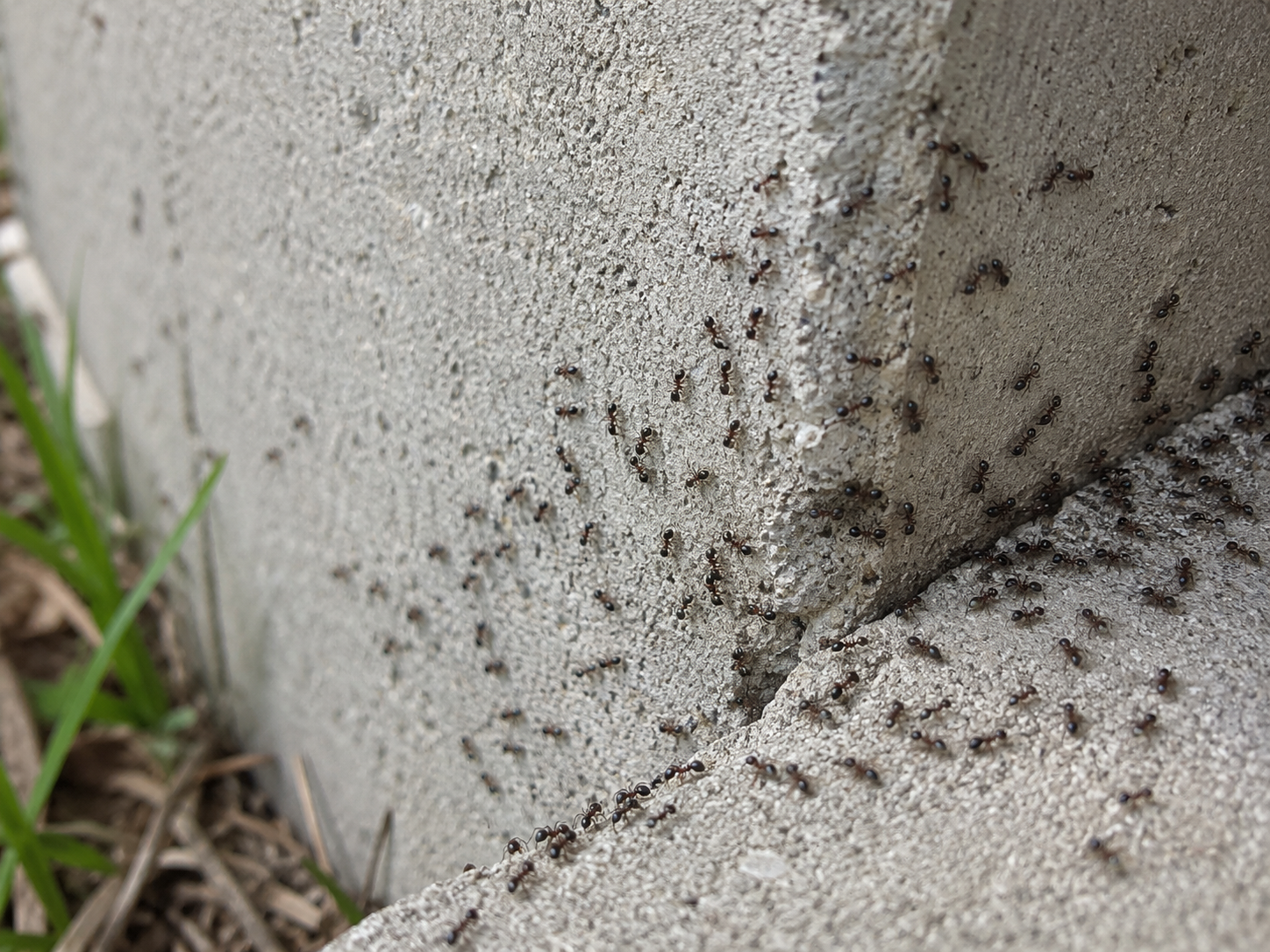
Ants are one of the most common pest problems homeowners face throughout Ontario. Whether they are marching across your kitchen counter or building nests around your foundation, ants can quickly become a frustrating issue. Many homeowners assume that all ant infestations are the same, but there is an important difference between indoor ant problems and outdoor ant problems.
Understanding where ants are nesting, why they are entering your property, and how their behaviour changes depending on location can help you choose the right treatment approach. In many cases, what appears to be an indoor infestation is actually being driven by a much larger colony outside the home.
If you are dealing with ants in Waterloo, Kitchener, Cambridge, or surrounding areas, learning the difference between indoor and outdoor ant problems is the first step toward long-term control.
Why Ants Invade Homes
Ants are constantly searching for food, water, and shelter. During the warmer months, colonies become highly active as they expand and send worker ants out to forage. A few ants spotted inside may seem harmless at first, but those workers are often scouts from a much larger colony. Once a food source is discovered, ants leave pheromone trails that guide other workers directly to the location. Before long, a handful of ants can turn into hundreds. The location of the colony plays a major role in determining how the infestation develops and how it should be treated.
What Is an Indoor Ant Problem?
An indoor ant problem occurs when ants establish a nest inside the structure of the home. This can happen within walls, beneath flooring, inside insulation, under cabinets, or in other hidden voids.
Indoor colonies often develop when ants find conditions that provide consistent moisture, warmth, and protection from the elements. Once established, these nests can survive year-round. Homeowners may notice signs such as:
- Ants appearing in multiple rooms.
- Ant activity during winter months.
- Ants emerging from electrical outlets or wall cracks.
- Trails that seem to disappear into walls or flooring.
- Recurring infestations despite cleaning.
Because the colony is located within the home, simply spraying visible ants rarely solves the problem. The nest itself must be addressed to eliminate the infestation.
Common Indoor Ant Species
Several ant species can establish colonies indoors in Ontario.
Pharaoh Ants
Pharaoh ants are tiny yellowish ants that frequently infest apartments, hospitals, and commercial buildings. They commonly nest inside wall voids, electrical systems, and other hidden areas. These ants can be particularly difficult to control because disturbing the colony with improper treatments can cause it to split into multiple colonies.
Pavement Ants
Although pavement ants typically nest outdoors, they sometimes establish satellite colonies indoors when conditions are favourable. They are often found near kitchens, bathrooms, and basements where food and moisture are available.
Carpenter Ants
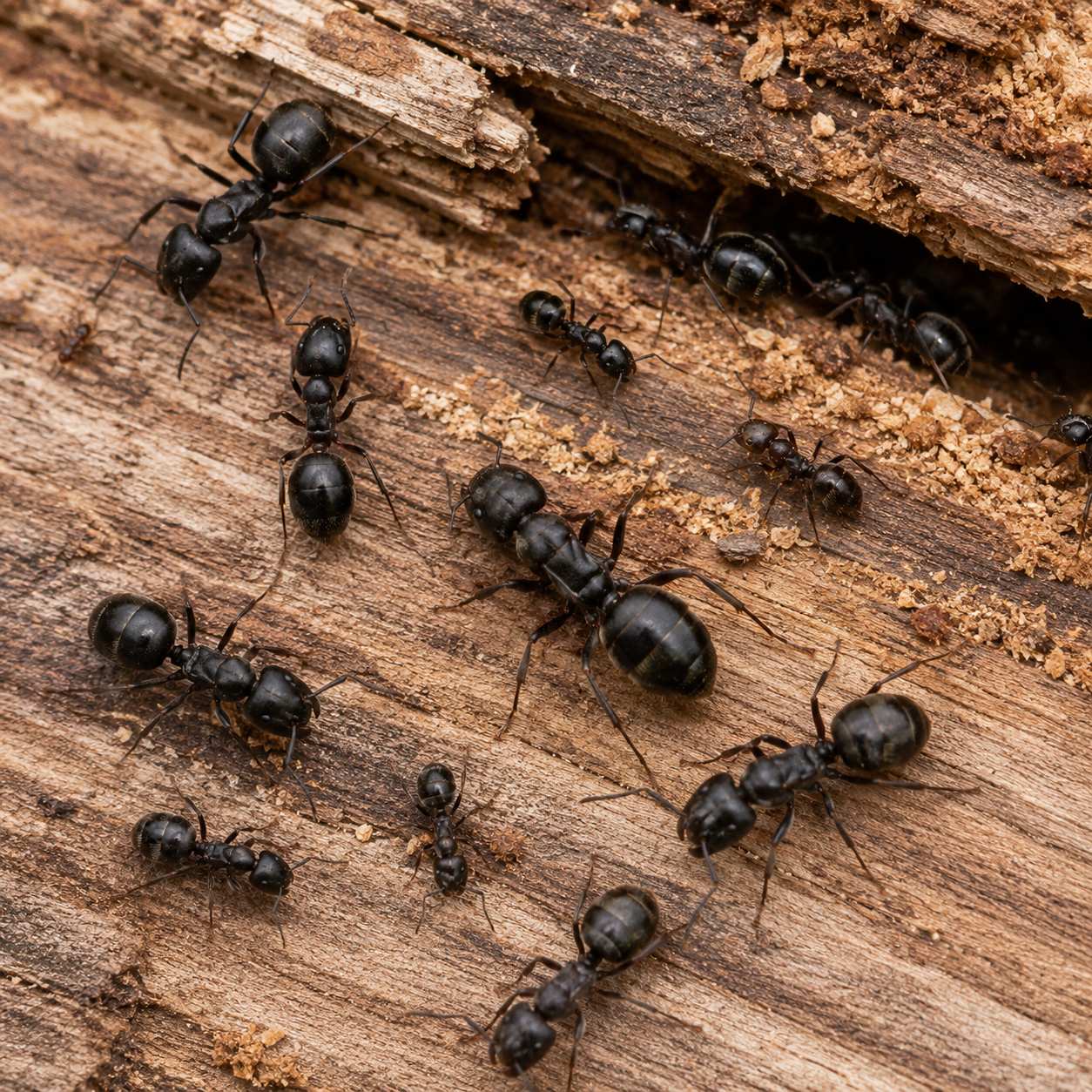
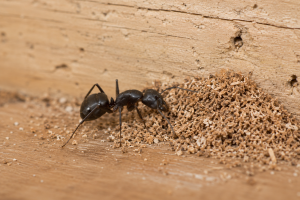
Carpenter ants are one of the most concerning indoor ant species because they excavate wood to create nesting galleries. Unlike termites, they do not eat wood. However, large colonies can weaken structural components over time if left untreated.
Carpenter ants are often found in:
- Wall voids
- Window frames
- Attics
- Deck supports
- Areas affected by moisture damage
What Is an Outdoor Ant Problem?
Outdoor ant problems occur when colonies are established outside the home but workers enter the structure while foraging for food. Many homeowners encounter this situation during spring and summer. The colony may be located under sidewalks, patios, landscaping stones, tree stumps, garden beds, or along the foundation. Although the nest remains outside, workers can travel significant distances to locate food. Common signs of outdoor ant activity include:
- Ant trails leading from exterior walls into the home.
- Ant mounds in lawns or gardens.
- Increased activity around patios and walkways.
- Ants gathering near garbage bins.
- Seasonal infestations that worsen during warm weather.
Because the colony remains outdoors, treatment strategies often focus on eliminating the nest and creating barriers that prevent workers from entering.
Why Outdoor Colonies Enter Homes
Most outdoor colonies do not intend to move indoors permanently. Instead, they send workers inside while searching for resources. Several factors attract ants into homes.
Food Sources
Even tiny amounts of food can attract large numbers of ants. Once a food source is discovered, workers recruit additional ants to exploit it.
Common attractants include:
- Crumbs on floors
- Sugary spills
- Pet food
- Grease residues
- Garbage containers
- Open pantry items
Water Sources
Moisture attracts many ant species. Leaking pipes, damp basements, condensation, and standing water can all encourage ants to enter. During dry periods, homes often provide more reliable water sources than outdoor environments.
Shelter
Weather conditions frequently influence ant activity. Heavy rain can flood outdoor nests, forcing ants to seek temporary shelter indoors. Extreme heat can have a similar effect, driving ants toward cooler environments.
The Challenge of Carpenter Ants
Carpenter ants blur the line between indoor and outdoor infestations because they often maintain both indoor and outdoor nests. A colony may have a main nest located in a tree stump or decaying log while maintaining satellite colonies inside a home. This arrangement makes treatment more complicated because both nesting sites must often be addressed. Homeowners may notice carpenter ants indoors even though the primary colony remains outside.
Signs of carpenter ant activity include:
- Large black ants.
- Wood shavings known as frass.
- Rustling sounds within walls.
- Winged ants during reproductive swarms.
Why DIY Treatments Often Fail
Many homeowners attempt to solve ant problems using over-the-counter sprays. While these products may kill visible ants, they rarely address the underlying colony. Indoor infestations often remain hidden behind walls or under flooring. Outdoor colonies may contain thousands of workers and multiple queens. In some cases, improper treatments can actually make infestations worse.
Certain species respond to disturbance by splitting into multiple colonies. This process, known as budding, can increase the size of the infestation rather than eliminate it. Successful ant control requires identifying:
- The species involved.
- The location of the colony.
- The extent of the infestation.
- Contributing environmental factors.
How Professional Ant Treatments Work
Professional ant control focuses on eliminating the colony rather than simply killing visible workers. A technician will help identify:
- Entry points.
- Ant trails.
- Nesting locations.
- Food sources.
- Moisture issues.
Treatment methods vary depending on the species and nesting location.
Indoor Treatments
For indoor infestations, treatments may target:
- Baseboards.
- Wall voids.
- Entry points.
- Hidden nesting areas.
Products are selected to reach workers and transfer throughout the colony.
Outdoor Treatments
For outdoor colonies, treatments often focus on:
- Foundation perimeters.
- Landscaping features.
- Nest locations.
- Exterior entry points.
Creating a protective barrier around the home helps prevent future invasions.
Preventing Future Ant Problems
While professional treatment is often necessary, homeowners can take steps to reduce the likelihood of future infestations. Keeping kitchens clean and storing food in sealed containers removes major attractants. Regularly cleaning under appliances and furniture helps eliminate hidden food sources. Repairing leaks and reducing moisture around the home can make the property less appealing to ants.
Outside, trimming vegetation away from the structure and reducing debris near the foundation can discourage nesting. Sealing gaps around doors, windows, utility lines, and foundation cracks also limits access points. These measures work best when combined with professional treatment for existing colonies.
When to Call a Professional
A few ants may not seem alarming, but recurring activity usually indicates a larger problem. You should consider professional treatment if:
- Ants keep returning after DIY efforts.
- Ants appear in multiple rooms.
- You suspect carpenter ants.
- Large numbers of ants are present.
- Activity continues throughout the year.
Early intervention often prevents colonies from expanding and reduces the risk of long-term structural or sanitation issues.
Professional Ant Treatment from KW Pest Control
Whether your ant problem originates inside the home or from a colony outside, proper identification and treatment are essential for lasting results. Ant infestations rarely disappear on their own, and treating only the visible ants often leads to continued activity.
At KW Pest Control, we provide professional ant treatment throughout Kitchener, Waterloo, Cambridge, and surrounding Ontario communities. Our team identifies the source of the infestation, targets the colony, and helps protect your home from future invasions. If you’re seeing ants indoors or around your property, contact KW Pest Control today to schedule an inspection and take the first step toward a pest-free home.