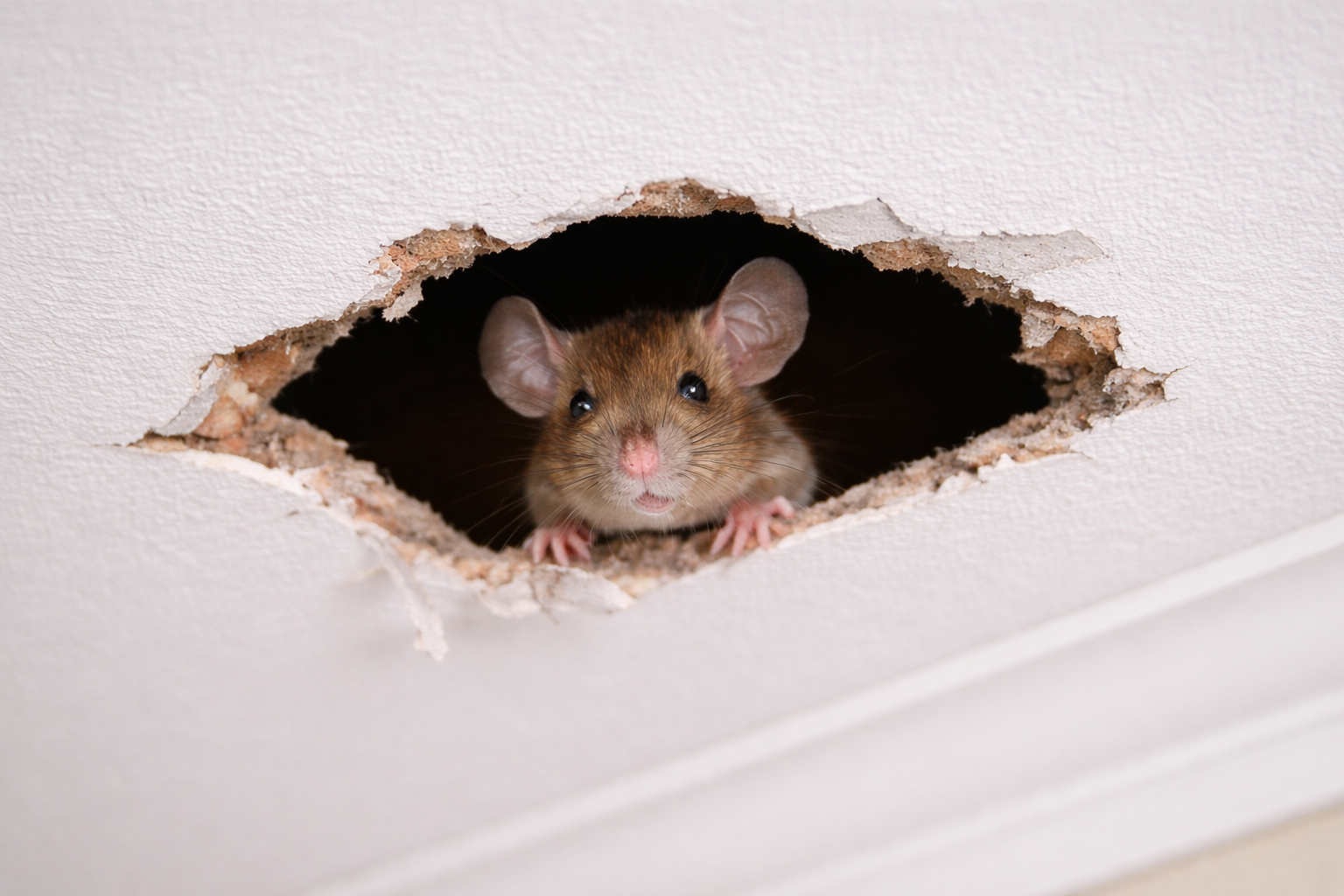
Hearing scratching sounds behind the walls at night or noticing small droppings in hidden areas can be unsettling. For many homeowners in Kitchener, Waterloo, and Cambridge, these are early signs of a mouse problem that is developing out of sight.
Mice rarely stay in open areas for long. Once they enter a home, they prefer to travel through wall cavities, ceiling voids, and attic spaces where they can move undetected. By the time you begin to notice activity, there is often an established presence inside the structure. Understanding the signs of mice in walls or ceilings helps you act quickly and prevent the issue from getting worse.
Why Mice Live Inside Walls and Ceilings
Mice are built to squeeze into tight spaces. Their flexible bodies allow them to move through gaps as small as a dime. Once inside, walls and ceilings provide warmth, protection, and easy access to different areas of the home.
These hidden spaces also allow mice to stay active without being seen. They can travel from the basement to the attic using wall cavities, often without ever entering the main living space. Homes in the Kitchener-Waterloo area are especially vulnerable during the fall and winter months when mice are actively seeking shelter from colder temperatures.
Scratching and Movement Sounds at Night
One of the most common signs of mice in walls or ceilings is noise, especially after dark. Mice are nocturnal, so their activity increases when the house becomes quiet.
You may hear:
- Light scratching or scurrying sounds
- Movement along walls or across ceilings
- Occasional squeaking
These sounds are often mistaken for pipes or settling materials, but they tend to follow patterns. If the noise happens consistently at night and seems to move from one area to another, it is often caused by mice traveling through wall cavities. Ceiling noises can be particularly noticeable in bedrooms or upper floors, while wall noises are often heard in kitchens, basements, and near exterior walls.
Droppings Appearing in Hidden Areas
Even if mice are primarily staying inside walls, they still need to leave those spaces to search for food. When they do, they often leave droppings behind.
You may find droppings:
- Inside kitchen cabinets or drawers
- Along baseboards or behind appliances
- Near pantry areas or food storage
Mouse droppings are small, dark, and shaped like grains of rice. Finding them in multiple areas is a strong indicator that mice are nesting nearby, often inside the walls.
A Strong, Musty Odour
Mice leave behind urine and nesting materials, which can create a noticeable smell over time. In enclosed spaces like walls and ceilings, this odour can build up and become more noticeable. If the smell becomes persistent, it can indicate ongoing activity within the structure.
Homeowners often describe it as a stale or musty smell that seems to linger in certain areas of the home. It may be stronger in:
- Cupboards or enclosed storage areas
- Basements
- Attics
Chewing Sounds or Damage
Mice constantly chew to keep their teeth from overgrowing. Inside walls and ceilings, this can lead to subtle but noticeable sounds or damage.
You may hear faint gnawing noises, especially at night. Over time, this behaviour can affect:
- Wooden framing
- Drywall
- Electrical wiring
Chewed wiring is a serious concern because it increases the risk of electrical issues or fire hazards. This is one of the reasons why mouse infestations should be addressed quickly.
Grease Marks and Smudge Trails
As mice travel through tight spaces, their bodies leave behind grease and dirt marks. While these are more visible along baseboards or entry points, they can also indicate activity within walls.
If you notice smudge marks near small openings, cracks, or along edges, it often means mice are using those areas as travel routes into the structure.
Activity in the Attic or Ceiling Spaces
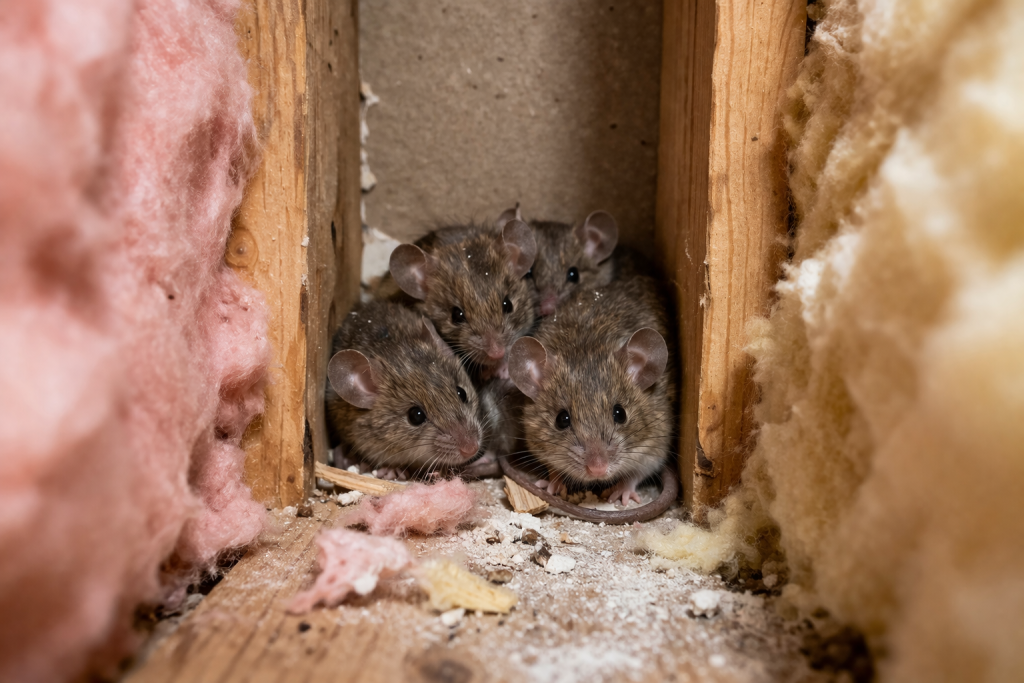
Ceiling noises are often linked to attic activity. Mice frequently nest in attic insulation where it is warm and undisturbed.
Signs of mice in attic or ceiling areas include:
- Scratching or running sounds above your head
- Insulation that appears disturbed or compressed
- Droppings in attic spaces
Even if you cannot access the attic easily, hearing consistent movement above the ceiling is a strong sign of activity.
Pets Acting Unusual
Pets often notice mice before homeowners do. If your cat or dog is suddenly focused on a specific wall, ceiling area, or cabinet, it may be reacting to movement or sound behind the surface.
Common behaviours include:
- Staring at walls or ceilings
- Pawing or scratching at certain areas
- Listening intently for extended periods
While pets cannot confirm an infestation, their behaviour can point you toward where activity is happening.

Why Mice in Walls Get Worse Quickly
Mice reproduce rapidly. What starts as a small issue can turn into a larger infestation in a short period of time. Because they are hidden inside walls and ceilings, the problem often grows before it becomes fully visible.
As the population increases, so does the level of noise, odour, and contamination. Mice may also begin to expand into new areas of the home, including kitchens, storage rooms, and living spaces. Waiting too long to address the issue usually leads to more extensive treatment and repairs.
How Mice Get Into Walls in the First Place
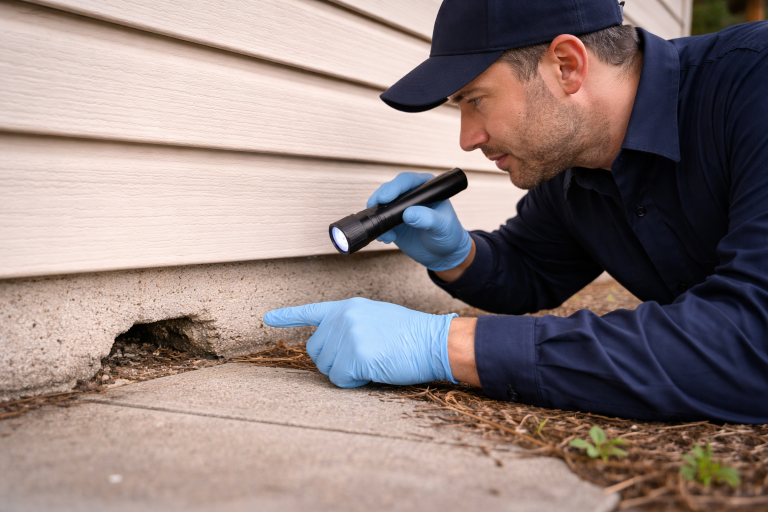
Mice do not appear inside walls randomly. They enter from outside through small gaps and openings, then move into the structure. Once inside, they use wall cavities as highways to move throughout the home.
Common entry points include:
- Gaps around utility lines and pipes
- Cracks in the foundation
- Openings near rooflines and vents
- Garage door gaps
- Areas where materials have shifted or worn down
The Importance of Proper Inspection
Finding mice in walls or ceilings requires more than just placing traps. The source of the problem needs to be identified. Without this step, treatments may only address part of the issue.
A proper inspection focuses on:
- Locating entry points on the exterior
- Identifying areas of high activity inside the home
- Determining how mice are traveling through the structure
Professional Treatment for Mice in Walls
Removing mice from walls and ceilings requires a targeted approach. Simply placing traps in open areas may not reach where the activity is actually happening. This approach removes active mice while preventing new ones from entering, which is what stops the problem from continuing.
Professional treatment often includes:
- Strategic placement of interior control stations
- Targeted trapping in high-activity zones
- Exterior inspection to identify and address entry points
Preventing Future Activity
Once mice are removed, prevention becomes the focus. Sealing entry points is the most important step in keeping them out.
Homes in Kitchener benefit from regular exterior checks, especially before colder seasons when mice are most likely to enter. Keeping food sources sealed and reducing clutter also helps limit what attracts them indoors.
Book Professional Mouse Control with KW Pest Control
If you are hearing scratching in your walls or ceilings, finding droppings, or noticing other signs of mice, it is important to act quickly. What seems like a small issue can grow fast when left untreated.
KW Pest Control provides professional rodent control services throughout Kitchener, Waterloo, and Cambridge. Our team focuses on identifying the source of the problem, removing active mice, and helping prevent them from returning.
For fast, effective service, contact KW Pest Control today to book your inspection and treatment.